
2026 Top Inflatable Boat Platforms for Global Buyers

The 2026 Top Inflatable Boat Platforms for Global Buyers guide examines equipment built for transport, stability, and practical water access. An Inflatable Boat Platform should support real use, not merely look impressive in product photos. Buyers may need a compact platform for fishing, rescue preparation, marina transfers, or leisure activities. Each purpose changes the ideal design.

Our evaluation considers deck dimensions, buoyancy chambers, load ratings, inflation time, materials, and attachment points. Details matter. A platform with reinforced PVC, stainless-steel fittings, and a non-slip deck can feel safer beside a moving boat. We also review portability, storage size, repair access, and manufacturer documentation. These details often decide whether a product remains useful after one season.

The 2026 market includes lightweight platforms for small tenders and heavier designs for frequent commercial handling. Some prioritize quick setup. Others offer better stability. Experience from owners, technical specifications, and responsible testing provide a stronger basis than advertising claims alone. We compare products against practical expectations and relevant safety guidance, while recognizing that local requirements may differ.

No platform is perfect.

Our research may not capture every tide, climate, or user habit. That limitation deserves attention. A buyer should verify capacity, operating conditions, warranty terms, and regional compliance before ordering. The aim is not to name one universal winner. It is to identify dependable choices for different budgets, vessels, and levels of experience. This approach helps global buyers make a clearer, safer, and more informed decision.
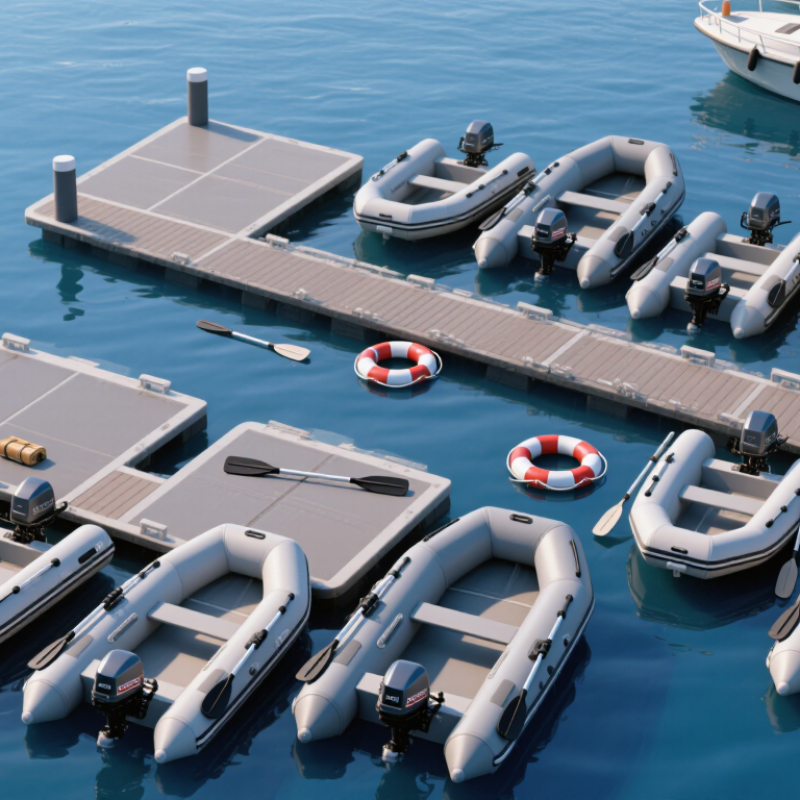
2026 Top Inflatable Boat Platforms for Global Buyers

What Are Inflatable Boat Platforms and How Do They Work?

Inflatable boat platforms are lightweight, buoyant structures built from air-filled chambers and a reinforced deck. They may serve as tender boats, work platforms, rescue-support craft, or modular water-access systems. Unlike rigid hulls, they gain buoyancy from separated tubes. If one chamber loses pressure, the remaining chambers can still provide partial flotation. That redundancy matters.

Most platforms use PVC-coated fabric or CSM rubber. Drop-stitch panels connect thousands of internal threads, allowing higher pressure and a firmer walking surface. Air pressure supports the deck, while wide tubes spread loads across the water.

A transom can carry an outboard motor, but the permitted power depends on hull length, tube design, and certification. ISO 6185 provides internationally recognized requirements for inflatable boats, including construction and buoyancy considerations. Buyers should still inspect the actual conformity documents.

Market context is useful, but not definitive. The National Marine Manufacturers Association’s 2024 U.S. Recreational Boating Statistical Abstract recorded about 11.6 million registered recreational boats in 2023, showing the scale of small-craft demand. Global buyers should compare this with local transport, labeling, and safety rules.

A platform rated for 600 kilograms may perform poorly when passengers, fuel, batteries, and uneven cargo are included. The numbers can look generous. Real water is less forgiving. In field use, sharp shoreline surfaces, cold air, and underinflation reduce stability.

I would also question marketing claims that ignore wind exposure and wave height. A practical inspection includes valve leakage, seam condition, pressure retention, deck flex, and drain performance before every launch.

Key Types of Inflatable Boat Platforms for Different Uses

2026 Top Inflatable Boat Platforms for Global Buyers

Key Types of Inflatable Boat Platforms for Different Uses

Inflatable boat platforms vary by purpose, load, and water conditions. A compact swim platform suits family boats, calm lakes, and short boarding tasks. It usually includes reinforced handles, non-slip flooring, and stable connection points. For fishing, a wider platform provides standing space and room for tackle boxes. Low-profile designs can reduce movement when anglers shift their weight. They still need careful load planning.

Modular floating platforms work better for docks, maintenance, and temporary work areas. Their separate sections are easier to transport through narrow roads or crowded marinas. Heavy-duty models often use layered PVC or reinforced fabric with welded seams. Commercial users should check buoyancy ratings, abrasion resistance, and repair access. A rescue or transfer platform needs visible markings, strong grab lines, and fast inflation options. Small details matter.

Tips: Match the platform to its real load, not its advertised maximum. Include people, fuel, tools, and waves in your calculation. Test connections before open-water use. Keep pressure within the manufacturer’s range. Too little air reduces stability, while too much can stress seams in hot weather. I have found that storage is often overlooked; a damp platform may develop odor or fabric damage. Let it dry fully. Then inspect every valve and attachment point.

2026 Top Inflatable Boat Platforms for Global Buyers - Key Types of Inflatable Boat Platforms for Different Uses

Typical market ranges for comparing inflatable boat platform categories. Actual specifications vary by hull design, materials, accessories, and local safety requirements.

Platform Type Typical Length Typical Capacity Typical Payload Floor and Hull Structure Suitable Propulsion Best-Fit Uses Main Advantages Important Buying Considerations
Roll-Up Slat-Floor Dinghy 2.0–3.6 m 1–5 people 250–600 kg Inflatable tubes with flexible fabric or removable wooden/aluminum slats Oars, small electric motor, or outboard up to approximately 10–15 hp depending on the model Tender boats, beach transport, short sheltered-water trips, and recreational boating Compact storage, relatively low weight, quick assembly, and easy transport Less rigid than higher-performance hulls; confirm floor strength, transom rating, tube diameter, and packed dimensions
Inflatable Air-Deck Boat 2.3–4.0 m 2–6 people 300–800 kg High-pressure inflatable drop-stitch or air-beam floor with inflatable side tubes Oars, electric motor, or small outboard commonly up to approximately 15–25 hp Family recreation, fishing, lake cruising, and portable tender applications Comfortable flat floor, reduced setup weight, good portability, and efficient packing The air floor requires correct inflation pressure; inspect drop-stitch quality, pressure ratings, and repair access
Inflatable Keel or V-Bottom Boat 2.7–4.5 m 3–8 people 450–1,100 kg Inflatable keel beneath a slat, air, or rigid floor to create a deeper V-shaped hull Small to mid-size outboard, commonly approximately 10–40 hp according to hull rating Coastal leisure use, fishing, island transfers, and moderate-speed cruising Improved tracking, directional stability, and handling in light chop compared with flat-bottom designs Heavier and more time-consuming to assemble; verify maximum power, load capacity, and intended water conditions
Rigid Inflatable Boat Platform 3.0–7.5 m 4–12 people 600–2,500 kg Rigid fiberglass or aluminum V-hull with inflatable buoyancy tubes and a rigid transom Outboard engines, commonly approximately 20–300 hp depending on hull size and certification Rescue support, patrol, water sports, commercial transfers, and offshore-capable recreational use High speed potential, strong load-carrying ability, good stability, and durable deck layouts Requires a trailer or lifting solution; compare hull material, tube fabric, fuel system, navigation equipment, and certification
Inflatable Catamaran Boat 2.7–5.5 m 2–8 people 400–1,500 kg Two parallel inflatable hulls joined by a rigid, slatted, or high-pressure inflatable deck Oars, electric motors, or outboards generally up to approximately 40–60 hp on larger models Fishing, diving, family cruising, shallow-water exploration, and stable work platforms Wide usable deck, strong initial stability, shallow draft, and efficient load distribution Wider packed size and more complex assembly; check crossbeam strength, tube protection, and turning behavior
Inflatable Pontoon Platform 2.4–5.0 m 2–10 people 500–1,800 kg Large buoyancy tubes or multiple pontoons supporting a broad rigid or inflatable deck Paddles, electric trolling motors, or low-power outboards where permitted by the design Leisure platforms, swimming access, fishing, water-based events, and calm-water work support Large stable deck area, high buoyancy, comfortable boarding, and modular accessory options Designed mainly for sheltered water; check freeboard, wind exposure, towing points, and anchoring arrangements
Packraft or Expedition Inflatable Craft 2.0–3.5 m 1–2 people 120–300 kg Lightweight coated-fabric hull with inflatable seat, floor, and optional spray deck Single or double-blade paddle; generally not designed for powered propulsion Hiking connections, river travel, remote exploration, and low-impact recreation Very low packed weight, compact storage, and easy carrying over land Limited speed and payload; select fabric thickness, abrasion protection, buoyancy, and repair-kit quality carefully
Commercial Workboat Inflatable Platform 4.0–9.0 m 6–20 people 1,000–4,000 kg Heavy-duty inflatable tubes combined with a rigid deck, reinforced transom, console, or modular work fittings Single or twin outboards, commonly approximately 40–500 hp according to certified configuration Marine maintenance, aquaculture, rescue operations, inspection, transport, and offshore support High buoyancy, practical working deck, configurable equipment, and strong operational versatility Total cost includes engines, electronics, trailer, safety equipment, and compliance; verify commercial certification and service support
Buyer note: Payload figures are approximate working ranges and should not replace the manufacturer's certified maximum load. Before purchase, compare tube fabric type, working pressure, valve system, repairability, maximum passenger rating, engine limit, packed size, warranty terms, and applicable local regulations.

Materials, Construction, and Performance Features to Compare

For global buyers, inflatable boat platforms should be judged by material performance, not appearance alone. Reinforced PVC is usually light, affordable, and easy to repair in the field. CSM-coated fabric handles heat, sunlight, and chemical exposure better, but it often costs more. Fabric weight matters too. Thin tubes may look acceptable in photos, yet feel weak under repeated inflation and loading.

Construction details reveal long-term quality. Check whether seams are heat-welded or bonded, then inspect the finishing around valves and transom plates. A reliable platform should resist twisting when passengers move across the floor. Drop-stitch flooring provides useful stiffness and a firm walking surface. It can also make storage less convenient. That trade-off is easy to overlook.

Performance depends on more than advertised capacity. Compare tube diameter, inflation pressure, drain design, and load distribution. A wide tube can improve stability in choppy water, while an oversized floor may reduce usable interior space. During inspection, measure pressure after several hours in changing temperatures. Small pressure loss may signal a valve problem, although temperature changes can mislead the result. UV-resistant coatings, abrasion guards, and corrosion-resistant fittings are valuable for coastal use. Still, no material is maintenance-free. Rinse salt, dry hidden seams, and store the platform away from sharp edges. The best choice may not be the lightest one. It is the platform whose materials, construction, and service demands match the buyer’s actual water conditions.

Safety, Stability, Portability, and Setup Considerations

2026 Top Inflatable Boat Platforms for Global Buyers

Safety begins before launch. A dependable inflatable platform should have reinforced seams, reliable valves, and visible pressure indicators. Check the recommended air pressure in shade, because heat can increase internal pressure. Separate air chambers are valuable when one section loses air. Keep a repair kit, hand pump, and spare valve tools onboard. Small details matter.

Stability depends on width, floor stiffness, tube diameter, and weight distribution. Place heavier equipment near the center, not at the bow or stern. A rigid or high-pressure floor can improve footing during boarding and fishing. Test the platform with its real load, including fuel, equipment, and passengers. I once focused too much on maximum capacity and overlooked awkward movement around the floor. That mistake changed my inspection routine.

Portability also affects safe setup. Look for carry handles, manageable packed weight, and storage materials that resist moisture. Unpack the boat on clean ground, away from sharp stones and hot surfaces. Inflate each chamber evenly, then inspect seams and fittings before entering the water. Test it ashore. Setup time varies with temperature, pump type, and user experience, so advertised speed may not match field conditions. Buyers should record pressure readings, drying time, and transport effort after several uses. These simple notes reveal problems that a showroom inspection can hide.

How Global Buyers Can Select and Purchase the Right Platform

2026 Top Inflatable Boat Platforms for Global Buyers

Global buyers should select an inflatable boat platform around actual operating conditions, not attractive photographs. Measure the boat, passengers, engine, fuel, and safety equipment together. Then compare the platform’s usable load capacity with a sensible safety margin. A crowded deck reduces stability quickly. It can also make boarding awkward. Check tube diameter, floor stiffness, drain design, lifting points, and material thickness. Reinforced seams matter when the platform faces frequent launching, sand, saltwater, or changing temperatures. Ask for test reports, maintenance instructions, and clear specifications. Vague answers deserve caution.

Purchase decisions also depend on shipping and support. Confirm packed dimensions, total weight, delivery terms, replacement-part availability, and warranty handling before payment. Request detailed photos of valves, seams, fittings, and the underside. A pre-shipment inspection can reveal weak bonding or incomplete accessories. Local service access is valuable, especially when the platform will travel between ports. Do not assume one design suits every coastline. Cold water, tropical sun, and rough storage conditions create different demands. No platform is perfect. A lighter model may transport easily but feel less rigid. A stronger model may cost more and require extra handling. Buyers should record these compromises and review them with operators before ordering. Sometimes, the cheapest quotation becomes the most expensive choice.