
Choosing a Bottle Sterilizing System can feel simple until the counter fills with bottles, pump parts, and drying racks. This guide compares seven systems for 2026, focusing on how they work in everyday routines. Some use steam, while others rely on ultraviolet light or combine sterilizing with drying. Each method has different setup needs, cycle times, and care instructions. Small details matter. A wide opening can make loading easier, and a clear cycle indicator helps when the kitchen is busy.
The comparison considers capacity, cleaning effort, operating requirements, and the space each unit occupies. It also looks at manufacturer instructions, because parts and materials vary. A system’s cycle should not be treated as a substitute for washing items first or following product guidance. Check whether bottles, nipples, and accessories are compatible before choosing. The best option depends on how many items a household uses, how often they need them, and whether countertop space is limited. Not every family needs the same features. That part is easy to overlook. Prices and product availability may change, so confirm current details before buying. This overview aims to make the trade-offs clearer, while recognizing that no single system is ideal for every routine.
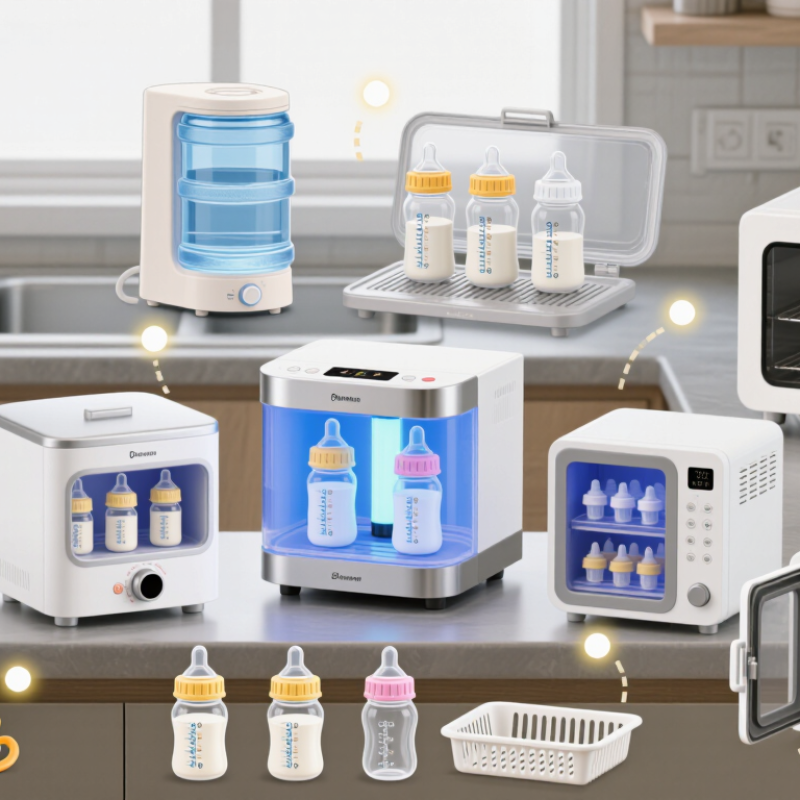
Bottle sterilizing systems reduce microbes left after washing; they do not remove milk residue or replace scrubbing. Steam models heat water until vapor circulates around bottles, nipples, and small parts. Some units then dry and store items in a closed chamber. UV systems use ultraviolet light, but folds and overlapping pieces can block exposure. Heat does the work.
The CDC’s “How to Clean, Sanitize, and Store Infant Feeding Items” guidance recommends daily sanitizing for babies younger than two months, babies born prematurely, and infants with weakened immune systems. It also advises cleaning feeding parts after every use. The CDC describes Cronobacter infection as rare but potentially severe in young infants. This distinction matters: sterilizers reduce microbial contamination, but they cannot guarantee a germ-free bottle.
A practical cycle starts with disassembled parts, rinsed promptly so dried formula does not cling around the bottle shoulder. Follow the device’s temperature and loading instructions, then keep clean hands off nipples after the cycle. Moisture trapped inside can allow recontamination. A cycle can feel reassuring, but it is not magic. Small valves and narrow vent holes need careful attention, and not every plastic part tolerates heat or UV. Check care instructions before treating the whole set.
Bottle sterilizers use heat, ultraviolet light, or chemical solutions, and each method fits a different routine. Electric steam units treat several parts at once, but need counter space and careful loading. Microwave steam systems are compact; users must add the specified water and let hot parts cool before handling.
Small details matter. A crowded basket can block steam from reaching bottle interiors.
UV systems avoid water and high heat, which can suit heat-sensitive accessories. Their performance depends on clean surfaces and unobstructed light exposure, so items need thoughtful placement.
Cold-water chemical systems work without electricity, but require the correct dilution and full soaking time. They may leave a noticeable solution smell. That is not automatically a sign of danger; follow the product’s directions and check whether rinsing is required.
These devices sanitize; they do not replace washing away milk residue first. The CDC advises daily sanitizing for infants under two months, babies born prematurely, or babies with weakened immune systems; for healthy older infants, daily sanitizing may be unnecessary when items are cleaned carefully.
NSF/ANSI 184 sets a 99.999% bacteria-reduction benchmark for qualifying dishwasher sanitizing cycles, not bottle sterilizers. It is a useful reference, not proof that every appliance or cycle performs equally. Source: CDC, “How to Clean, Sanitize, and Store Infant Feeding Items”; NSF/ANSI 184.
When evaluating bottle sterilizing systems for 2026, look beyond cycle time and marketing claims. CDC guidance recommends daily sanitizing for feeding items used by babies under two months, babies born prematurely, or babies with weakened immune systems. That makes clear instructions and repeatable performance important. Check whether the manufacturer explains the test method, organisms tested, and conditions required for claimed results. A glowing indicator is not proof.
Use independent standards as a useful comparison, not a shortcut. NSF/ANSI 184 sets a benchmark of at least a 5-log reduction in bacteria for qualifying residential dishwashers under specified test conditions. That standard does not automatically certify a bottle sterilizer, so check the exact scope of any certification. Does the system reach all bottle interiors, collars, and nipples? Can steam escape without leaving wet parts in a sealed chamber? CDC also advises following device instructions and allowing items to air-dry. I would compare capacity against a real sink-side load, then inspect how often reservoirs need descaling. Small details matter. A cycle that is difficult to clean may be harder to use consistently, and that deserves an honest second look.
The right system depends on your counter space, routine, and bottle materials.
Electric steam units suit frequent home use, while microwave steam bags take up less room.
A sterilizer-dryer combines two steps, but its longer cycles may not fit rushed evenings.
UV-C cabinets avoid water and heat; check that bottles sit apart so light reaches all surfaces.
Small kitchens matter.
Three other options round out the seven: compact travel sterilizers, sterilizer-storage units, and bottle-washer combinations with a sanitizing cycle.
Each trades convenience for something: travel models hold fewer items, storage units need regular cleaning, and washer combinations can be bulky.
CDC infant-feeding guidance recommends daily sanitizing for babies under two months, babies born prematurely, or babies with weakened immune systems. It also emphasizes cleaning feeding items before sanitizing them.
That age threshold is useful, not a substitute for a clinician’s advice.
Check the manual for compatible plastics, cycle duration, drying instructions, and replacement-part availability.
A strong steam cycle is less useful if bottles must be hand-dried and left exposed.
CDC guidance also notes that a dishwasher with hot water and a heated drying or sanitizing cycle can be sufficient for many items. So a dedicated machine may be unnecessary for some households.
The awkward part: no system fixes rushed washing or crowded loading.
A bottle sterilizer works best when bottles are washed first. Sterilizing does not remove milk film or dried formula. Take bottles apart, including rings, valves, and nipples, then wash each piece with clean water and dish soap. Rinse away every trace of soap. Check the sterilizer’s manual for compatible materials and loading instructions. Crowded parts may block steam or heat. Give them room.
Steam burns quickly. Let the cycle finish, and wait before opening the lid. Keep your face and hands away from escaping steam. Use clean, dry hands or tongs to remove parts, and place them on a clean surface. If the unit has a drying function, follow its instructions; otherwise, air-dry items fully. I sometimes find one damp nipple tucked beneath a bottle. It is worth checking.
Unplug the unit before cleaning, and let it cool. Wipe the exterior with a soft, damp cloth; never submerge the electrical base. Empty leftover water after use, then clean the reservoir as directed. Mineral deposits can build up, especially with hard water, so descale only with the method recommended in the manual. Avoid abrasive pads and unapproved cleaners. Inspect the cord and plug for damage, and stop using the unit if either looks worn. Store dry parts in a clean, covered place. A busy day makes shortcuts tempting, but a quick check prevents missed residue.