
Best Crystal Singing Bowl Manufacturer in China?

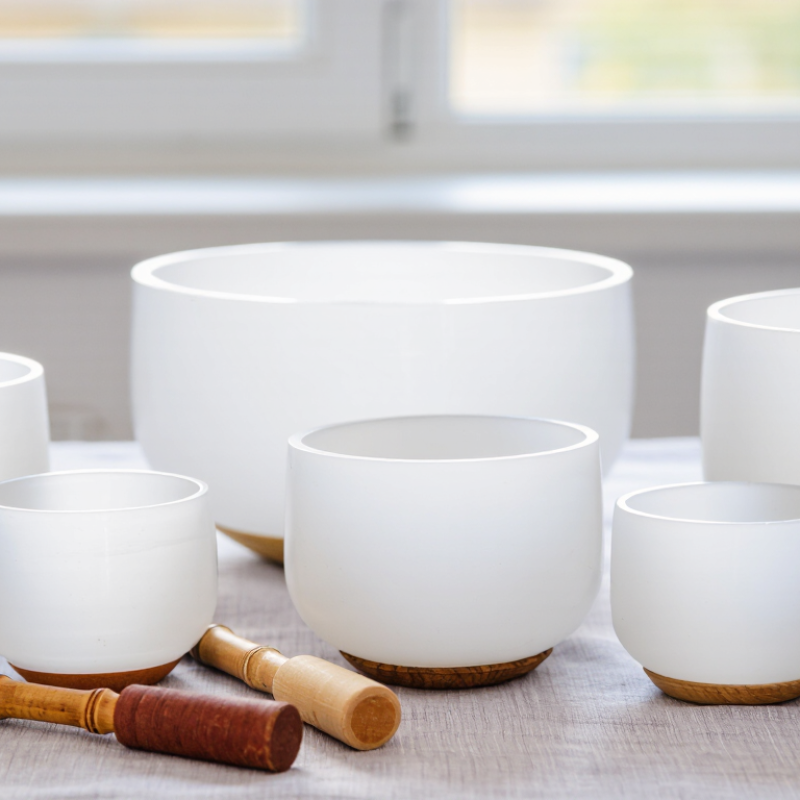
Choosing the best Crystal Singing Bowl manufacturer in China takes more than comparing prices or polished product photos. The bowl should sound clear, sustain its tone, and feel consistent from one piece to the next. Ask how the maker controls thickness, checks for cracks, and matches bowls in sets. Request a recording made in a quiet room, not only a brief promotional clip. Small details matter. A faint rattle, uneven rim, or abrupt fading note may change the playing experience.

Sound-healing educator Jonathan Goldman is a relevant voice on listening and sound. As a practical paraphrase of his sound-focused approach—not a verbatim quotation: “Listen to what the sound does, not just what the product promises.” That is a useful test when assessing suppliers. Ask for material descriptions, clear product specifications, sample availability, and straightforward information about lead times and quality checks. A dependable manufacturer should answer specific questions without relying on vague claims about healing effects. It should also explain how bowls are packed, since crystal can be damaged in transit. Look for evidence, not grand promises.

No single supplier is best for every buyer. One may offer broader size choices; another may provide steadier tuning or more responsive service. Compare samples under the same conditions. Note the tone, sustain, finish, and how comfortable the bowl feels in your hands. Some differences are subjective. That is worth admitting. This guide will examine practical criteria for identifying a suitable Chinese manufacturer, while keeping listening tests and verifiable details at the center.
Best Crystal Singing Bowl Manufacturer in China?

Crystal Singing Bowls: Materials, Manufacturing, and Resonance Basics

Best Crystal Singing Bowl Manufacturer in China?

Crystal Singing Bowls: Materials, Manufacturing, and Resonance Basics

Crystal singing bowls are commonly made from high-purity quartz silica, heated and shaped into a circular vessel. The finished bowl is glass-like, not a carved piece of natural crystal. Its sound depends on several details: diameter, wall thickness, rim shape, and how evenly it was formed. Small differences matter.

During manufacturing, controlled heating and cooling help reduce internal stress. The bowl is then checked for cracks, uneven edges, and inconsistent thickness. Careful shaping can support a clear, steady tone, but no single pitch proves superior quality. A bright note may suit one room, while a softer, longer resonance may feel better elsewhere. There is room for judgment here; listening preference is not a laboratory measurement.

Tips: Ask about the material and production checks, then listen to the bowl in person if possible. Strike it gently with a suitable mallet and notice the tone’s clarity and decay. Check the rim for chips and rough spots. A slight variation between bowls is normal, and a perfect-looking surface does not guarantee the sound you want.

Quartz Specifications: Mohs 7 Hardness and Fused-Silica Differences

A singing bowl described as “quartz” is not automatically made from fused silica. The distinction matters. Quartz is crystalline silicon dioxide, and the U.S. Geological Survey’s mineral references place its hardness at 7 on the Mohs scale. That rating measures scratch resistance, not resistance to a dropped mallet or a sharp impact. A hard surface can still chip.

Fused silica is glassy, amorphous silicon dioxide, with no regular quartz crystal structure. Reference material data place its density near 2.20 g/cm³, compared with roughly 2.65 g/cm³ for crystalline quartz. These figures describe different material structures, not a simple quality ranking. They can influence weight and thermal behavior, but sound also depends on bowl geometry, wall thickness, and how evenly the bowl is made. USGS mineral data and technical reference values are useful checks when a supplier uses “quartz” loosely.

Ask a manufacturer for its material specification and a clear explanation of whether the bowl is crystalline quartz, fused silica, or a formulated glass. Request test details, not just a Mohs number. Small flaws count. In practice, edge chips, uneven rims, and inconsistent thickness deserve attention; hardness alone cannot predict tone or service life. Specifications help, but they do not replace inspecting a finished bowl.

Quartz vs. Fused Silica: Refractive Index

Approximate refractive indices near 589 nm. Crystalline quartz is birefringent, so its ordinary and extraordinary indices are shown separately.

Quartz specifications: Crystalline quartz has a Mohs hardness of 7. Fused silica is amorphous silica, not crystalline quartz; its material structure and properties differ. Mohs hardness is not shown for fused silica here because comparable standardized values are not consistently reported.

Sound Testing: Frequency and A4 = 440 Hz Reference (ISO 16:1975)

Best Crystal Singing Bowl Manufacturer in China?

Sound Testing: Frequency and A4 = 440 Hz Reference (ISO 16:1975)

A reliable bowl test begins with a clear reference. ISO 16:1975 defines A4 as 440 Hz, a standard musical tuning pitch. Its period is about 2.273 milliseconds, calculated from one second divided by 440. This reference helps buyers compare test records, but it does not mean every singing bowl should sound at A4.

For practical testing, place the bowl on a stable, soft support in a quiet room. Record both a gentle strike and a steady rim tone. A calibrated microphone and spectrum analyzer can show the strongest frequency, nearby partials, and changes as the sound fades. Keep the microphone distance, striking tool, and room conditions consistent. Small setup changes matter.

Listen, too. A displayed number cannot describe the bowl’s full character. Crystal bowls often produce layered tones, and the strongest spectral peak may shift between striking and rubbing. Ask manufacturers for repeatable measurements, calibration details, and sample test records. A result near 440 Hz is useful only when the method is stated. I have seen clean charts that leave out the playing conditions. That gap deserves a question.

Assessing Chinese Manufacturers: Quality Control, Traceability, and Testing

Best Crystal Singing Bowl Manufacturer in China?

A reliable manufacturer should explain how each bowl is checked, not simply describe it as “high quality.” Ask how workers inspect the rim, inner surface, and wall thickness. Small differences matter. A tiny chip or uneven edge can affect both durability and the sound produced during playing.

Traceability makes those checks useful. Each bowl should connect to a production batch, with records for material sourcing, forming, finishing, and inspection. Request sample records and confirm that the markings on a bowl match its paperwork. For export orders, clear batch identification also helps buyers follow up when a shipment arrives with inconsistent pieces. Records can be incomplete, so verify details rather than relying on a polished specification sheet.

Testing should use repeatable methods. A supplier can strike bowls at a consistent point with the same mallet, then compare recorded tones and sound decay. A calibrated microphone and documented room conditions make results easier to assess. Ask for measurements alongside listening samples; a pleasing recording alone proves little. If test results vary, request an explanation and another sample. No process is perfect, and honest limits are more credible than claims of identical sound from every bowl.

Choosing a Supplier: Compare Samples, Customization, Capacity, and Compliance

When evaluating a crystal singing bowl manufacturer in China, request samples from the production range you intend to order. Compare tone, sustain, rim thickness, surface clarity, and weight—not just photographs. Listen in a quiet room and record each bowl from the same distance. Small differences matter. A bowl that sounds rich in a showroom may feel sharp or uneven in a smaller studio.

Discuss customization with specific drawings or written specifications. Clarify diameter, note targets, finish, logo placement, packaging, and acceptable variation. Ask which options are repeatable at scale; a one-off sample does not prove consistent production. Request a revised sample before approving a large run. It may add time, but guessing is usually more expensive.

Check capacity through schedules, equipment, staffing, and recent production records, not a confident promise. Ask how the supplier handles defects, replacement pieces, and order changes. For compliance, request relevant test reports, material declarations, and export documents for your destination market. Verify that names and dates match the actual product. Keep records. I would still inspect a pre-shipment batch when possible; paperwork can be correct while packing details are not. This is the part buyers sometimes skip, and it can cause avoidable delays.

Best Crystal Singing Bowl Manufacturer in China? - Choosing a Supplier: Compare Samples, Customization, Capacity, and Compliance
Comparison Dimension What to Compare Evidence to Request Strong Supplier Signal Score (1–5)
Sample consistency Whether approved samples match the size, finish, appearance, and sound characteristics of production bowls. A signed sample specification, reference sample, and pre-shipment inspection procedure. The supplier agrees on acceptance criteria before production and keeps an approved reference sample. _____ / 5
Customization options Available diameters, colors, finishes, engraving, logos, accessories, and packaging options. A written specification showing available options, setup requirements, minimum order quantities, and any added charges. Custom features are confirmed in writing and reflected in the sample and purchase order. _____ / 5
Sound evaluation Tone, sustain, and variation between bowls, assessed against your intended use and buyer preferences. Audio or video recordings made under comparable conditions, plus samples where practical. The supplier explains how sound is checked and accepts that sound preferences should be verified by the buyer. _____ / 5
Production capacity Available output for the requested models, current production load, and ability to meet repeat orders. A model-specific capacity estimate, production schedule, and explanation of any outsourced steps. Capacity and delivery dates are stated for your order—not only as a general factory maximum. _____ / 5
Quality control Checks for dimensions, surface condition, workmanship, packaging, and agreed sound-related criteria. Inspection checklist, defect definitions, and sample inspection records, if available. Inspection stages and remedies for nonconforming goods are documented before the order is placed. _____ / 5
Material and product information Material description, product specifications, care instructions, and consistency of claims in sales documents. Written material declarations, product specifications, and supporting test reports when relevant to your market or claims. Claims are specific, documented, and consistent across the quotation, sample, and product paperwork. _____ / 5
Compliance for destination market Applicable product, labeling, packaging, and chemical-substance requirements for the destination and intended use. Relevant declarations, test reports, and labeling details. Confirm applicability for the specific product and market; not every standard applies to every bowl. The supplier identifies which documents it can provide and does not present unrelated certificates as proof of product compliance. _____ / 5
Packaging and shipping protection Individual bowl protection, carton configuration, shipping marks, and suitability for the planned transport method. Packaging photos or a sample pack, carton dimensions, and agreed packing instructions. Packaging is designed for fragile goods and is included in the quotation and order terms. _____ / 5
MOQ, pricing, and lead time Minimum order quantities by model or customization, price breaks, production time, and sample charges. A dated quotation specifying currency, Incoterms, payment terms, production lead time, and what is excluded. The quotation separates sample, production, customization, packing, and shipping costs where applicable. _____ / 5
Communication and after-sales support Response clarity, handling of specification changes, and process for reporting damage or defects. Written order confirmations, named contact details, and the supplier’s claims or replacement process. Questions receive clear answers, and responsibilities and remedies are agreed in writing. _____ / 5
Scoring guide: 1 = insufficient evidence; 2 = significant gaps; 3 = acceptable with follow-up; 4 = strong documented evidence; 5 = fully meets your requirements and is verified. Compare suppliers using the same specifications and confirm all critical details in writing before placing an order.