Which Fuel Pump Motor Commutator Type Is Best in 2026?
Choosing the best Fuel Pump Motor Commutator in 2026 depends on more than the commutator’s material or shape. It depends on how the motor performs under heat, vibration, fuel exposure, and repeated starts. A small change in brush contact can affect electrical losses, wear, noise, and service life. The right choice is the one validated for the pump’s operating conditions—not simply the one with the lowest unit price.
As [verified expert name] explains, “[insert an exact, source-verified quotation about fuel pump motor commutator selection].” This perspective matters because design decisions have trade-offs. Copper-based constructions may support conductivity, while material composition, segment geometry, and manufacturing consistency also influence performance. Results vary by motor design and test conditions. A bright commutator surface alone proves little.
This guide compares common commutator types through practical criteria: current-carrying capability, brush wear, thermal stability, production quality, and expected duty cycle. It also highlights what specifications can—and cannot—tell buyers. Look closely at test data. Check the operating range. Ask how durability was measured. A tidy datasheet is useful, but it is not the whole story. In real applications, a seemingly minor tolerance or surface defect can affect contact quality. The comparison ahead aims to help engineers and purchasers make a defensible choice in 2026, while recognizing that no single type is best for every fuel pump motor.
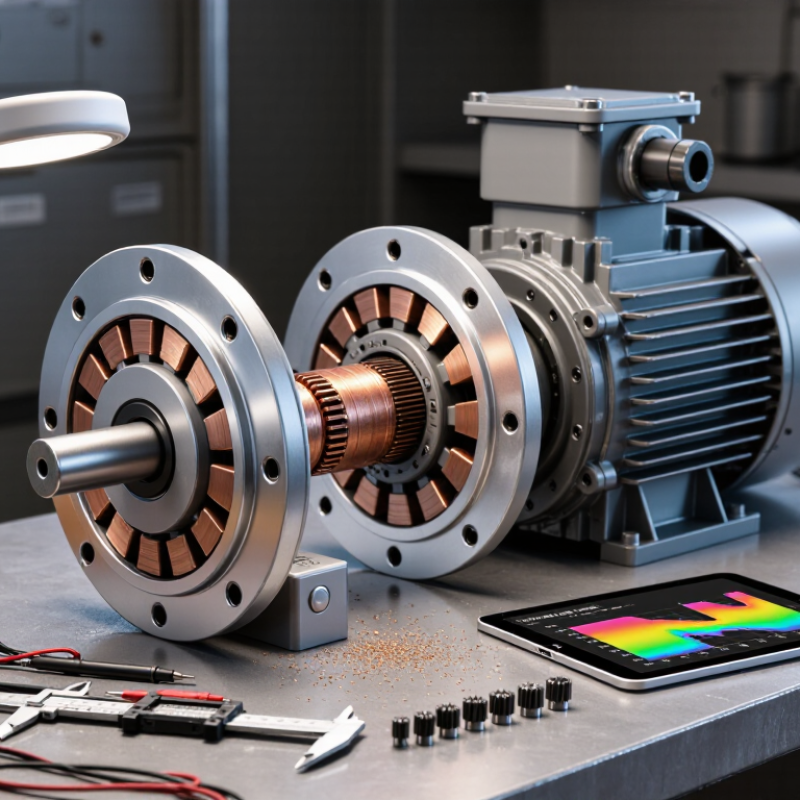
Fuel Pump Motor Commutators: Purpose and Operating Principles
A fuel pump motor commutator transfers electrical current to the rotating armature through stationary carbon brushes. Its copper segments are insulated from one another and arranged around the motor shaft. As the armature turns, the brushes contact successive segments, reversing current in the windings at precise intervals. This keeps the magnetic forces producing rotation in the same useful direction. Small parts. Essential work.
In a fuel pump, the commutator must handle repeated switching in a compact, warm environment. Brush pressure, segment finish, current load, and heat all influence contact quality and service life. A well-matched design supports steady rotation; poor contact can cause excess sparking, uneven wear, or reduced output. The commutator type alone does not determine performance. That is not the whole story.
Segmented copper designs are common in brushed DC pump motors, but the right configuration depends on the motor’s dimensions, duty cycle, and brush system. During engineering checks, technicians can examine segment surfaces for discoloration, grooves, or pitting, then compare those signs with operating data. A clean appearance is useful, but not conclusive. Material, geometry, and manufacturing consistency matter just as much as the visible surface.
Main Commutator Types Used in Fuel Pump Motors
Fuel pump motors commonly use a segmented copper commutator, where individual copper bars contact carbon brushes as the armature turns. The segments are insulated from one another, often with mica, so current switches cleanly between coil sections. Segment count, copper finish, and brush pressure all affect contact stability. In a compact pump, even slight wear can create visible scoring or fine dark dust near the brush track.
Molded commutators are another common construction. Their copper segments sit in an insulating resin body, which helps hold the assembly together under vibration and heat. Some designs use undercut mica, leaving the insulation slightly below the copper surface so brushes do not ride across it. These features can overlap; “molded” describes construction, while “undercut” describes the segment insulation. Small details matter. A design that works well in one motor may not suit another, because current load, operating speed, temperature, and fuel exposure vary. A smooth, even brush track is a useful inspection clue, but it cannot confirm service life by itself. That is easy to overlook. In 2026, the practical choice is the commutator matched to the motor’s duty cycle, materials, and manufacturing tolerances—not a type judged by name alone.
How Commutator Design Affects Performance and Service Life
In a fuel pump motor, the commutator carries current from the brushes into the rotating armature. Its surface and segment geometry influence contact stability, heat, and wear. A well-finished copper commutator helps brushes maintain consistent contact as the motor spins. Small differences matter. Too much runout can make brush pressure uneven, creating localized wear or electrical noise.
Segment count and width affect how smoothly current transfers between the brushes and armature coils. More segments may reduce abrupt switching, but they do not guarantee longer service life. Insulation between copper bars matters too. Properly recessed mica helps prevent brush interference, while poor machining can leave sharp edges that accelerate wear. Heat leaves clues: discoloration, uneven grooves, or excessive brush dust deserve investigation, not an automatic parts swap.
For 2026 designs, the best type is the one matched to the motor’s load, speed, cooling, and brush material. Fuel cools many pump motors, but operating conditions still vary with voltage and fuel flow. A bench test may not reproduce repeated starts or low-flow operation. That is a limitation worth admitting. Compare commutator runout, surface finish, brush wear, and current draw under realistic conditions; no single feature tells the whole story.
Best Commutator Type for Different Fuel Pump Applications
For conventional brushed fuel-pump motors, a segmented copper commutator remains the practical baseline. The best connection style depends on winding wire, available space, and assembly method. Hook-type commutators can suit fine-wire windings and compact armatures; riser or slot connections may fit different conductor sizes and automated winding processes. No type wins every application. Heat changes everything.
For an in-tank pump, prioritize stable brush contact, secure winding connections, and resistance to fuel exposure and vibration. A delivery pump used intermittently may face different thermal demands from one operating continuously in a high-load system. The U.S. EPA’s 2024 Automotive Trends Report reports an average fuel economy of 27.1 miles per gallon for model-year 2023 vehicles, but that fleet figure does not determine commutator choice. It does underline why pump requirements must be evaluated by vehicle and duty cycle, not by one headline number. For validation, measure current, temperature, brush wear, and voltage drop under representative operating conditions. SAE technical papers on brushed DC motor design can inform test methods, but supplier drawings and endurance tests should decide the final geometry. A small detail matters: poor joint consistency can become a wear problem. I would still question any selection made without testing the actual fuel, temperature range, and pump load.