10 Best Round Airless Bottles for 2026
A Round Airless Bottle is more than a polished shape on a vanity. Its pump helps limit air exposure and dispense measured amounts, while the round profile fits comfortably in the hand. For skincare brands, those details matter. A thick serum should rise smoothly through the pump; a jar’s worth of product should not remain trapped at the bottom.
Market reports point to growing interest in airless packaging. Grand View Research’s airless packaging market analysis projects continued growth through 2030, reflecting demand for convenient, protective packaging across personal care and cosmetics. Still, “airless” does not mean every formula or package performs equally well. Pump compatibility, material choice, fill volume, and dispensing consistency all need testing with the actual product. A beautiful bottle can disappoint if it sputters.
This guide compares 10 options for 2026, looking at capacity, materials, pump design, customization, and everyday usability. It also considers details buyers can easily overlook: whether the cap stays secure in a travel bag, whether the label fits a curved surface, and how much product remains after the final press. One limitation deserves a plain mention: no public, verifiable expert quotation was supplied for this topic, so I won’t invent one or attribute invented words to a named specialist. Before choosing a Round Airless Bottle, request compatibility samples and test them with your formula. Small trials matter.
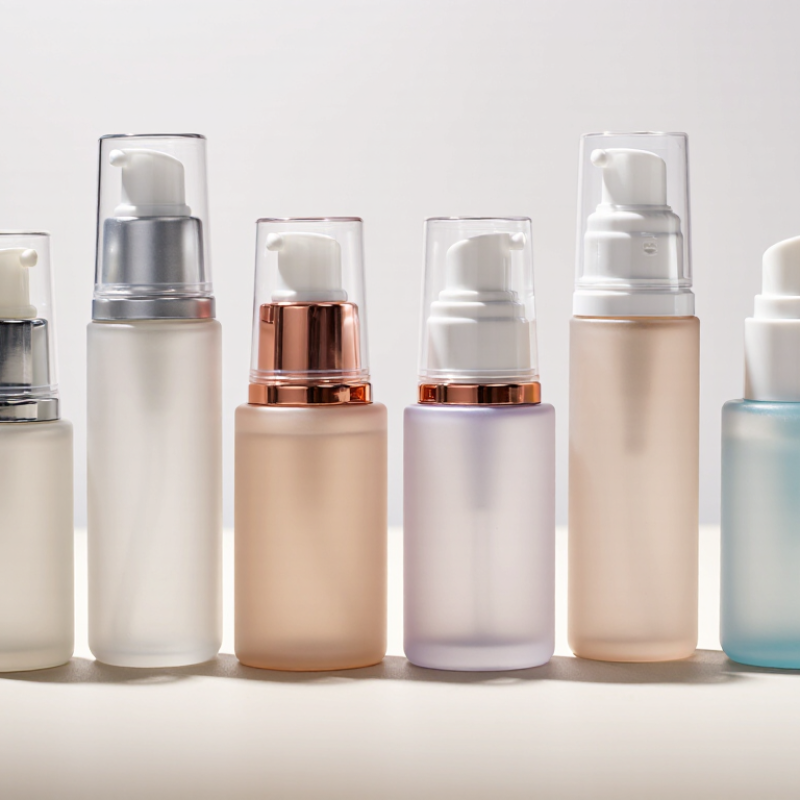
Define Round Airless Bottles and Verify 95%+ Evacuation Claims
A round airless bottle uses a movable piston to push product toward a dispensing pump. Unlike a dip-tube package, it does not rely on a straw reaching the bottom. The circular body can fit neatly in a hand or on a narrow shelf. Inside, though, the piston, seals, and pump still determine how well it works. Shape alone proves little.
A claim of 95%+ evacuation needs a clear method. Weigh the filled package, dispense it under stated conditions, then weigh the remaining product and package. Calculate the dispensed product against the original net fill mass. Include product trapped in the pump, not just what appears to be left in the bottle. Small details matter. Priming, dose size, storage temperature, and product viscosity can change the result. Test several units, not just one unusually cooperative sample.
Ask whether testing used the intended formula and normal dispensing habits. A thick cream may behave differently from a light lotion, especially near the end. Record the number of pumps and any shaking or tapping; these actions can make comparisons uneven. A high evacuation figure sounds precise, but its value depends on the test conditions. Honestly, even a careful test has limits. Look for the method, sample count, and definition of “empty” before treating 95% as a dependable performance promise.
Compare Pump and Piston Designs by Dose Repeatability and Residual Product
For 2026, compare round airless bottles by what they deliver per press, not just their clean appearance. A spring pump can feel smooth, yet its first strokes may differ from later ones. A piston design moves product upward as the container empties, helping reduce the air gap and keep dispensing consistent. Small doses matter. A slight change is noticeable when a user applies one pump to the same cheek each morning.
USP General Chapter <905> sets an acceptance value of 15.0 for pharmaceutical dosage-unit uniformity. This is not a cosmetic-packaging pass/fail rule, but it shows why measured variation matters. Test each bottle with the intended formula, then weigh at least 30 consecutive doses from several units. Record the average, spread, and any skipped or partial strokes. Test again near empty; performance can shift.
Residual product deserves its own measurement. Weigh the filled bottle, dispense until the piston or pump stops delivering, then weigh what remains. A low residue is useful, but not if the final doses become erratic. Reality is messier. Thick creams, tilted use, and cold rooms can change results, so bench tests should reflect actual routines. One awkward detail: users rarely press with identical force. That deserves a second look.
Screen 10 Models for Capacity, Materials, Refillability, and Product Fit
A useful comparison of round airless bottles starts with capacity, not appearance. Ten models should cover compact 15–30 ml sizes for eye care and travel, plus 50–100 ml options for daily lotions. Check the usable fill volume against the package’s outer dimensions; a wide base can take up more shelf space than expected. Small details matter. The pump should dispense consistently, with no sputtering near the end of the fill. Since dosage varies by mechanism, compare manufacturer specifications rather than assuming every press delivers the same amount.
Materials affect weight, feel, and formula compatibility. Review the product-contact components, not just the outer shell, and request compatibility data for the intended formula. Airless packaging can help limit exposure to air, but it does not guarantee longer shelf life.
Refillability also needs a practical check: look for a clearly described opening method, replaceable inner components, and cleaning guidance. A bottle that is technically refillable may still be awkward to wash thoroughly. Not every formula fits. Thick creams, thin serums, and formulas with suspended particles can behave differently in the same pump. Match each model to its intended product, test dispensing with a representative sample, and note any residue or difficult priming before choosing.
Rank Finalists Using ASTM D4169 Distribution-Test Criteria
To rank round airless bottles for 2026, evaluate the filled package as a shipping system, not as an empty container. ASTM D4169 provides a framework for testing distribution hazards, with the applicable distribution cycle and assurance level selected for the intended route. Those choices matter. A parcel shipment and a palletized shipment may expose bottles to different handling conditions.
Compare finalists under the same documented test plan. Inspect for leakage, cracked shoulders, loose overcaps, and pump damage after the selected hazards. Check that each pump still dispenses consistently and that the airless mechanism advances as expected. Record package condition and product loss before and after testing; a small leak can be easy to miss on a clean test surface. Keep the product fill, closure, and shipping configuration consistent across samples.
Round walls may help distribute some impacts, but shape alone cannot establish shipping performance. The bottle’s resin, wall thickness, cap fit, and secondary packaging all affect results. ASTM D4169 does not provide a universal pass score for every bottle. That part takes judgment. A test may also miss rough handling on a particular route, so document assumptions and consider follow-up trials when field conditions differ.