How to Choose the Best Portable Water Air Cooler?
Choosing the best Portable Water Air Cooler requires more than comparing tank size or advertised airflow. The right model must match your climate, room size, ventilation, and daily habits. A cooler that feels refreshing beside a window may perform poorly in a sealed bedroom. Humidity changes everything.
Market interest is growing. Grand View Research estimates that the global evaporative cooler market reached about USD 6.1 billion in 2023. Its report also projects continued growth through 2030. These figures include residential, commercial, and industrial products. They do not prove that every portable unit offers good value. A simple ranking can mislead.
J. R. Camargo, an evaporative-cooling researcher and author, described the technology as “an environmentally friendly alternative to conventional air conditioning.” That benefit depends on responsible use. Portable water coolers usually consume less electricity than compressor-based air conditioners. However, they need fresh water, regular cleaning, and suitable airflow. Standing water can become a hygiene concern when maintenance is ignored.
This guide examines practical details, including cooling range, water-tank capacity, fan noise, power consumption, filter design, and portability. Picture the buying decision clearly: a 10-liter tank beside a desk, a 45-decibel fan during sleep, and a plug-in watt meter showing actual use. Manufacturer claims still deserve checking. Some specifications are measured under ideal conditions.
We will compare useful features, expose common marketing gaps, and explain when a Portable Water Air Cooler may not be the best choice. The answer is rarely universal. Your local humidity may matter more than the brand name.
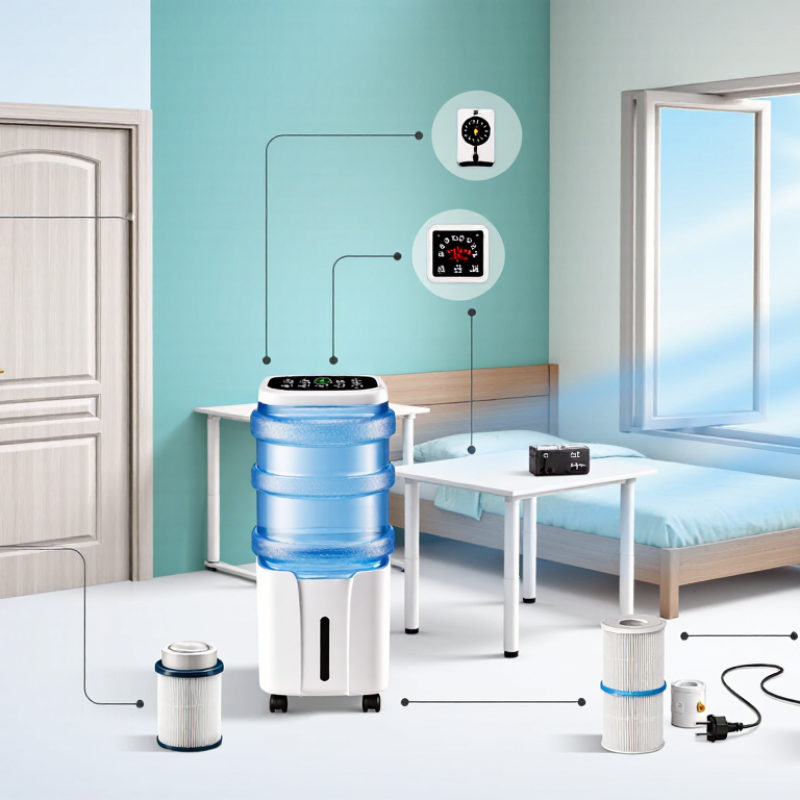
What Is a Portable Water Air Cooler?
A portable water air cooler is a compact fan-based appliance that uses water to create a cooler airflow. Unlike a refrigerated air conditioner, it does not use a compressor or sealed refrigerant system. It draws warm air through a damp cooling pad, then pushes that air forward with a fan. As water evaporates, it absorbs heat from the passing air. That distinction matters. Cooling remains local.
The best unit should match your room and climate. In a dry area, evaporation can feel noticeably refreshing. In humid weather, the effect may be limited. I initially assumed a larger water tank always meant better cooling, but that is not necessarily true. Airflow, pad quality, noise level, and power use often matter more. Check whether the tank can be removed easily. Small details affect daily cleaning.
Look for adjustable fan speeds, a visible water-level indicator, and stable housing. A timer is useful beside a bed or desk. Keep the cooler near an open window when possible, because fresh air helps prevent excessive indoor humidity. It should not be treated as a full-room air conditioner. Never ignore cleaning instructions, either. Dusty pads can reduce performance and create unpleasant odors. Practical testing reveals an imperfect truth: the “best” cooler depends heavily on personal comfort, room size, and local humidity.
How Does a Portable Water Air Cooler Work?
How to Choose the Best Portable Water Air Cooler?
A portable water air cooler lowers perceived temperature through evaporative cooling. A fan draws warm room air across a wet cooling pad. Water absorbs heat as it changes from liquid into vapor. The outgoing air feels cooler, although its moisture level increases. This process uses less electricity than compressor-based air conditioning. It does not create cold air mechanically. That distinction matters.
In daily use, performance depends strongly on climate. Dry air allows faster evaporation and usually produces a clearer cooling effect. In humid rooms, water evaporates slowly, so the fan may feel more useful than the cooling function. I have found that placing the unit near an open window improves airflow. However, an open window can reduce the cooling sensation during very hot weather. This trade-off is easy to overlook. Portable operation also depends on a filled tank, clean pad, and unobstructed intake. A small tank may require frequent refilling.
When choosing one, check airflow settings, tank capacity, noise level, and cleaning access. A visible water-level indicator helps prevent dry operation. Washable parts can reduce odors and mineral buildup. Use clean water and follow the safety instructions. I would not judge cooling power from fan speed alone. Strong airflow can feel impressive while adding little cooling in humid conditions. Measure the room and consider ventilation before buying. The best model is not always the largest. It should match your climate, space, and willingness to maintain it.
How to Choose the Best Portable Water Air Cooler?
A portable water air cooler lowers air temperature by evaporating water. This chart shows the approximate maximum theoretical cooling potential from 30°C air at different relative humidity levels. Cooling potential decreases as humidity rises because humid air can absorb less additional moisture. For better performance, choose a unit with strong airflow, suitable water-tank capacity, and use it in a well-ventilated space.
How Can You Use and Maintain It Safely?
How to Use and Maintain a Portable Water Air Cooler Safely
A portable water air cooler needs careful placement. Keep it on a level, dry floor, away from curtains and electrical sockets. The U.S. Department of Energy explains that evaporative coolers can use about one-quarter of the energy used by central air conditioning in suitable dry climates. However, they add moisture indoors. The U.S. Environmental Protection Agency recommends keeping indoor humidity between 30% and 50%. Use a simple hygrometer. If windows become wet, reduce the cooling time.
Unplug the unit before cleaning or moving it. Empty the water tank daily, then wipe its corners with a clean cloth. Follow the manufacturer’s cleaning instructions, especially for disinfectants. The Centers for Disease Control and Prevention advises regular cleaning of devices that hold water because stagnant water can support germ growth. Clean the filter weekly during heavy use. Remove mineral scale when you see white, chalky deposits. Never block the air outlet.
Small checks prevent larger problems. Inspect the power cord for cuts, unusual heat, or loose connections. Stop using the cooler if you smell burning or hear repeated buzzing. ASHRAE guidance emphasizes that evaporative cooling performance depends on climate, airflow, and maintenance. I used to think colder air meant better performance. It does not. In humid weather, ventilation may matter more than extra water.