
Clear Pvc Film is a transparent, flexible sheet used when people need visibility and a practical barrier. You may see it wrapped around products, fitted over a display, or sewn into a clear pocket on a bag. Its smooth surface helps keep dust and splashes away while leaving labels and contents easy to see. That simple combination explains its broad use.
In packaging, clear PVC film can wrap goods or form windows in boxes. In homes and workplaces, it may cover tables, protect documents, or create flexible panels for storage and display. Thicker grades can serve as clear curtains or protective covers, while thinner grades suit lightweight packaging. The right choice depends on thickness, flexibility, clarity, and the conditions of use. Not every grade performs the same.
That detail matters.
Some films can become cloudy, crease, or stiffen after prolonged exposure to heat or sunlight. Contact with oils or certain cleaning products may also affect the surface. Buyers should check product specifications and confirm that the grade suits its intended use, especially for food contact or outdoor applications. Clear does not mean indestructible. Nor does it guarantee a perfect view. Understanding the material’s strengths and limits makes it easier to choose wisely, reduce avoidable waste, and get better results from a simple-looking sheet.
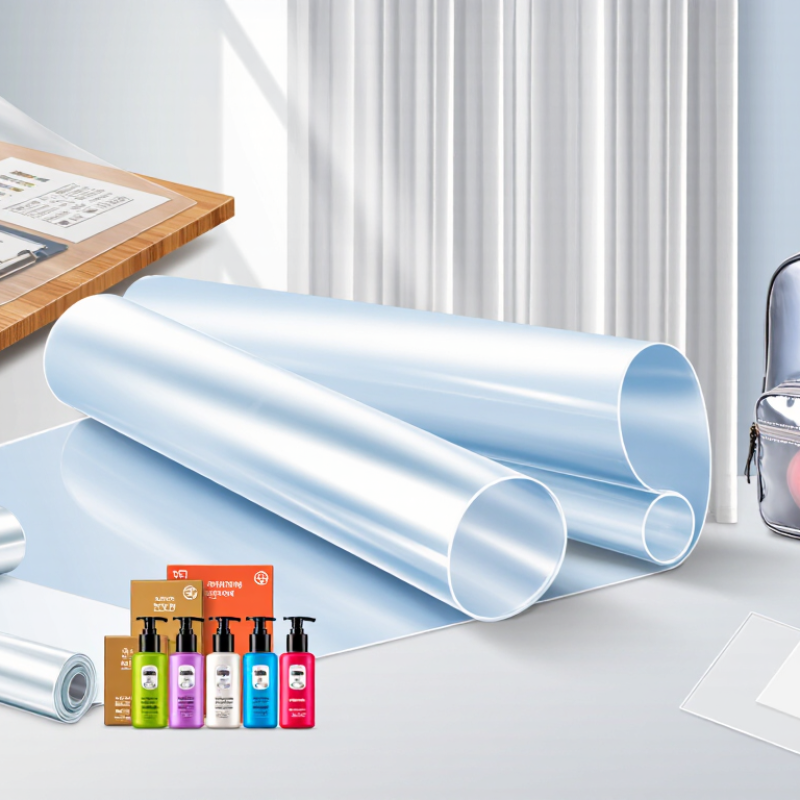
Clear PVC film is a transparent, flexible sheet made from polyvinyl chloride resin. The resin alone is relatively rigid, so manufacturers blend it with plasticizers to improve flexibility. Stabilizers and other carefully selected additives help control processing and product performance. The exact recipe varies with the intended use. Small differences matter.
To make the film, manufacturers mix the ingredients into a uniform compound, then heat and shape it. Common methods include calendering, which presses softened material between rollers, and extrusion, which pushes it through a flat die. The sheet is cooled, trimmed, and inspected for thickness, surface defects, and clarity. A faint haze or uneven edge can signal a process issue, though appearance alone does not confirm performance.
Clear PVC film is used where visibility and flexibility are useful, such as protective covers, packaging, flexible panels, and document sleeves. Its properties depend on formulation and thickness, so one sheet may bend easily while another feels firmer. Check suitability for the actual environment, especially where heat, sunlight, or repeated bending is involved. PVC film is practical, but it is not a universal material.
Clear PVC film is used for window panels, protective covers, packaging, and temporary partitions where visibility matters. Its performance depends on more than transparency. Thickness affects stiffness and tear resistance: a thin sheet bends easily over a table, while a heavier one holds its shape better. That added strength can make it less flexible around tight corners.
Clarity matters. A clean, smooth surface lets light through, but scratches and dust can quickly make a panel look cloudy. Flexibility also changes with temperature. In a cold workspace, some films may feel less pliable, so folding or fastening them can leave creases. Heat, sunlight, and cleaning chemicals may gradually affect appearance or handling, depending on the film’s formulation and exposure.
Check the details. For a cover that will be handled often, consider abrasion resistance and how securely its edges can be joined. For a window panel, light transmission and distortion may matter more. These properties vary by product, so test a sample in the actual setting when possible. A small test helps, though it cannot predict years of wear. One trade-off is easy to miss: a thicker film may resist damage better, yet weigh more and feel less convenient to move.
| Property or Dimension | Typical Characteristics | Influence on Performance | Common Uses | Practical Considerations |
|---|---|---|---|---|
| Optical clarity | Clear PVC film can provide good visibility; light transmission and haze vary with thickness, surface finish, and formulation. | Allows users to see through a cover or package while helping shield its contents from dust and contact. | Packaging windows, document covers, protective screens, and clear curtains. | Request optical specifications for applications where low haze, color consistency, or precise visibility is important. |
| Flexibility and thickness | PVC can be formulated as flexible film or as more rigid sheet. Thickness and plasticizer content affect handling and stiffness. | Flexible grades can conform to shapes and fold; thicker or less flexible grades provide more body and support. | Flexible packaging, table covers, stationery, protective covers, and strip curtains. | Choose thickness and flexibility for the intended forming, folding, hanging, or handling conditions. |
| Moisture resistance | PVC film resists liquid water, but its water-vapor barrier performance depends on grade and thickness. | Helps protect items from splashes and surface moisture; it is not automatically a high-barrier material for long-term moisture control. | Dust and splash covers, general-purpose packaging, and protective liners. | For moisture-sensitive products, evaluate the film’s measured water-vapor transmission rate and the seal design. |
| Chemical resistance | Often performs well against many dilute acids and alkalis; resistance to oils, solvents, and other chemicals varies by formulation. | Can provide a useful barrier in some handling environments, but unsuitable chemical exposure may cause swelling, softening, or damage. | Protective covers and selected industrial or laboratory uses. | Check compatibility against the specific chemical, concentration, temperature, and contact duration before use. |
| Temperature behavior | Flexibility and strength change with temperature. Cold can make some grades less flexible, while heat can soften or distort them. | Temperature affects ease of handling, dimensional stability, and service life. | Indoor curtains, packaging, and covers used in controlled environments. | Use the supplier’s service-temperature guidance; do not assume all PVC films have the same temperature limits. |
| Weathering and UV exposure | Unstabilized or indoor-oriented grades may discolor or lose properties with prolonged sunlight and outdoor exposure. | UV stabilizers and other formulation choices can improve weatherability, but performance remains grade-specific. | Outdoor covers or glazing applications when a suitable weather-resistant grade is selected. | Confirm UV and outdoor-aging performance for the intended exposure rather than relying on appearance alone. |
| Weldability and fabrication | Many flexible PVC films can be joined using suitable heat-sealing or high-frequency welding processes. | Can form seams, pockets, and enclosed covers without relying only on adhesive bonding. | Inflatable products, made-to-size covers, pouches, and flexible curtains. | Seal quality depends on the film formulation, thickness, equipment settings, and process control. |
| Fire behavior | PVC is generally more difficult to ignite than many common plastics, but fire performance varies by formulation and test conditions. | May affect material selection in buildings or equipment, but does not by itself establish compliance with a fire-safety standard. | Selected indoor partitions, curtains, and protective coverings where the specified grade is appropriate. | For regulated uses, verify the exact product’s test results and applicable local fire requirements. |
Note: These are general material characteristics. Actual performance depends on the PVC formulation, thickness, manufacturing process, and conditions of use.
Clear PVC film appears in packaging, retail displays, workshops, and homes because it can be made flexible, transparent, and easy to cut. In packaging, manufacturers use suitable grades for sleeves, protective covers, and blister packs, where shoppers can see the product without opening it. Thickness matters. A thin film may suit a folded pouch, while a heavier sheet works better as a desk protector or document cover.
In stores and workspaces, clear PVC film can form flexible strip curtains that separate areas while allowing people to see through them. It also serves as a cover for tables, signs, and equipment exposed to dust or splashes. At home, people use it for craft projects, drawer liners, and temporary surface protection.
It stays flexible. But it can scratch, crease, or become cloudy with wear, and heat or sunlight may shorten its useful life. Not always ideal.
For food contact, outdoor use, or repeated cleaning, check the film’s stated grade and care guidance; clear appearance alone does not confirm suitability. A small test piece can reveal whether the material feels too stiff, marks easily, or fits the intended surface.
Clear PVC film is used for flexible curtains, protective covers, packaging, and transparent window panels. Choosing the right grade starts with its working conditions, not appearance alone. A film that looks crystal clear on a sample may turn cloudy after repeated bending. Details matter.
PlasticsEurope and EPRO report that global plastics production reached 413.8 million tonnes in 2023, with PVC accounting for about 10% in Plastics – the Fast Facts 2024. This scale does not identify the right film, but it shows why grades vary. For a shop curtain, compare thickness, flexibility, and resistance to scratches. For outdoor use, ask for UV-weathering data; indoor film may yellow sooner. Not always obvious.
Check clarity using haze and light-transmission results, and compare mechanical data such as tensile strength. ASTM D1003 covers haze and luminous transmittance testing; ASTM D882 covers tensile properties of thin plastic sheeting. Ask for the actual test results and intended temperature range, rather than relying on “clear” or “heavy-duty” labels. For food-contact packaging, verify suitability for the specific use and market with the supplier. I would also request a small sample and bend it around the same radius the finished product will face. That extra check can reveal stiffness or surface marks early.
Clear PVC film is often used for protective covers, temporary partitions, display windows, and splash guards. Its transparency keeps spaces bright, but the surface can scratch more easily than glass. Handle it with clean, dry hands. Small grit can leave fine marks when the sheet is moved. Unroll the film on a clean, flat surface, and avoid sharp folds that may leave lasting creases. For a fitted cover, trim slowly with a stable cutting surface beneath it. Keep blades pointed away from your hands.
For routine cleaning, use lukewarm water, mild soap, and a soft cloth. Wipe gently; scrubbing may haze the surface. Test any cleaner on a hidden corner first. Avoid abrasive pads and strong solvents unless the supplier confirms they are suitable. Heat is a separate concern. Do not place PVC film near flames, hot lamps, or heating elements, and never burn it. High temperatures can deform the material and may release harmful fumes. Store unused film away from direct sunlight and excessive heat. One detail is easy to miss: clear does not mean food-safe. Check the product’s care information before using it near food, children, or sensitive equipment. Advice can vary by formulation, so guessing is not a great shortcut.