
For global buyers, Puffs Plus Vape compliance depends on more than a supplier’s promise or a polished package. Requirements can differ by destination, product category, and sales channel. Labels, ingredient records, age controls, and shipment documents all need careful review. Small details matter, including warning text, language, batch numbers, and the information printed beside a barcode.
The regulatory landscape is uneven. The World Health Organization’s 2023 report on the global tobacco epidemic identified 34 countries that banned e-cigarette sales and 74 that had no specific regulations for these products. Those figures show why one market’s paperwork may not satisfy another’s requirements. They are not a substitute for checking current rules with local authorities or qualified compliance professionals. That gap matters. Buyers should verify product specifications, supplier documentation, and destination-market requirements before placing orders. A checklist helps, but it cannot catch every change or resolve unclear product classifications. Some records may look complete yet still leave important questions unanswered. That deserves attention.
This guide outlines seven practical checks for responsible sourcing and documentation. It focuses on traceable records, clear product information, and careful market-by-market review—not shortcuts. Keep evidence organized, record who verified each requirement, and revisit decisions when rules change. For Puffs Plus Vape buyers, a cautious process is more dependable than assumptions.
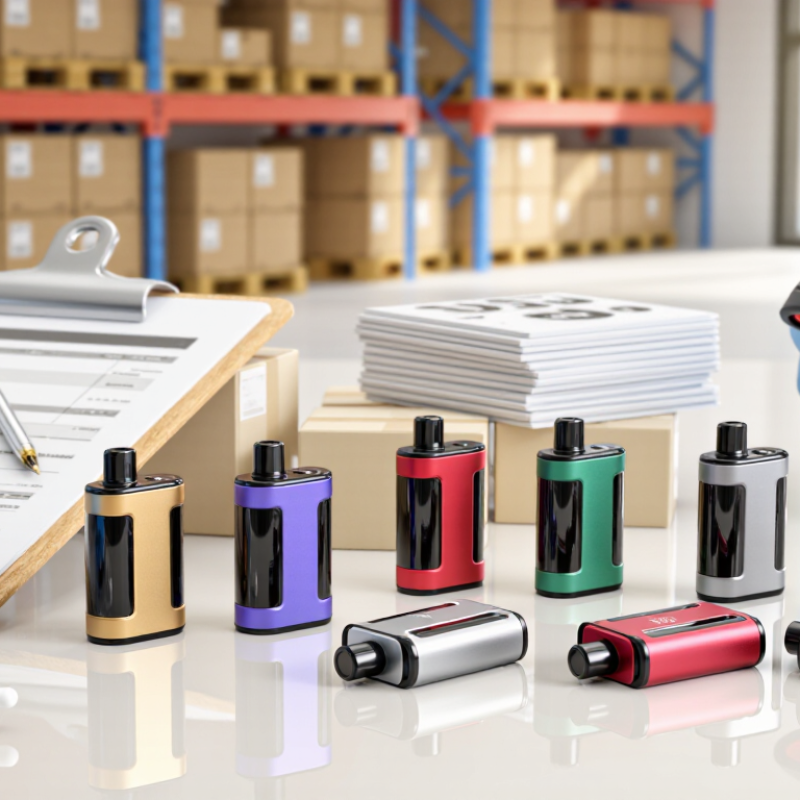
For global buyers, EU readiness begins with the destination country, not the carton label. Under the EU Tobacco Products Directive, nicotine-containing e-cigarette liquid must not exceed 20 mg/mL. This limit concerns liquid concentration, so a device description or puff count cannot replace a clear product specification. Check whether the item contains nicotine and whether its declared strength matches the technical documents and packaging. Small mismatches matter.
Tip: Build a country file before ordering. Record nicotine strength, ingredients, package size, warning requirements, notification status, and local-language label needs. Ask a qualified compliance adviser to confirm current national procedures.
Do not assume one label automatically clears every EU market. National authorities may set notification, packaging, tax, or sales requirements beyond the shared TPD baseline. Keep dated supplier declarations, test results, approved artwork, and batch records. Check that each version matches the goods being shipped. A spreadsheet helps, but it can still miss a rule change or an outdated label. Check again before dispatch.
For U.S. sales, verify that the exact e-cigarette product has FDA marketing authorization before treating it as eligible for sale. The process is commonly described as premarket authorization, not ordinary “clearance.” A filing receipt or pending application is not the same as authorization. Check the FDA’s public tobacco-product records and compare the product name, device type, and other identifying details.
Details matter. Authorization applies to specific products, not automatically to every item from one manufacturer. A different model, formulation, or product configuration may fall outside the authorized scope. Keep dated screenshots or records of your search, and ask the supplier for documentation that matches the exact goods offered. Then confirm the status independently with current FDA information. Small mismatches count.
Records can be confusing. If the public listing is unclear, pause the purchase and seek qualified U.S. regulatory advice rather than relying on a sales claim. FDA marketing authorization does not mean a product is safe or risk-free; it means the agency has authorized marketing under the applicable requirements. I would not treat a polished certificate or a confident email as enough evidence on its own. Verify, document, and revisit the status before each new order.
For nicotine-containing e-cigarettes covered by EU rules, tanks and cartridges generally must not exceed 2 mL. Refill containers are generally limited to 10 mL. These are separate capacity limits, not interchangeable allowances. Check the exact product type and destination market before placing an order.
Measure the usable tank or cartridge capacity, not just the liquid supplied in the package. A device with a small tank can still be paired with a refill bottle that exceeds the permitted size. Check the bottle’s stated volume, packaging specifications, and product documents together.
Check the details. Keep clear records for each model and packaging version.
EU requirements may be implemented or supplemented differently across member states, and product categories matter. Do not assume one specification suits every market. Ask suppliers for current technical documentation, then verify the applicable national rules with a competent authority or qualified compliance adviser.
Labels can look correct while a document is outdated; that detail is easy to overlook. Recheck limits before shipment, especially after packaging or design changes.
Since 1 June 2025, the UK has prohibited the sale and supply of single-use vapes. The restriction applies across England, Scotland, Wales and Northern Ireland. For global buyers, a familiar product name or “reusable” label is not enough. Check the device itself: it must be rechargeable, refillable, and have a coil that can be replaced. Labels can mislead.
Before placing an order, ask the supplier for product specifications, clear photographs, and written confirmation of how each feature works. Check that the charging port functions, the refill opening is accessible, and replacement coils are available for the exact model.
Keep dated records with invoices and batch details; they can help resolve questions later. A confident email alone is weak evidence, even when a supplier seems reliable. I would pause shipment if documents conflict or a feature cannot be verified.
Also check current official UK guidance and the destination market’s rules, since product requirements can change. This is a practical screening step, not legal advice.
Before booking freight for a battery-powered device, ask the supplier for the UN 38.3 test summary. This document identifies the tested cell or battery and confirms completion of applicable transport tests. Match its model details to the goods being shipped. A similar-looking battery is not necessarily the same one.
Check the paperwork carefully. Small mismatches matter. Compare the battery model, configuration, and shipment description across the test summary, packing list, and carrier documents. UN 38.3 testing does not replace packaging, marking, or carrier requirements; these can vary by battery type, shipment method, and destination. Ask the freight provider to confirm current requirements before dispatch. Keep dated copies of the test summary and written guidance. In practice, product names can change faster than documents do, so recheck after any battery or supplier update. I have seen teams treat an old file as “close enough”; that shortcut creates avoidable delays. A checklist helps, but it is not a substitute for verifying the actual shipment. Keep records accessible.
| Compliance check | What to verify | Practical action | Important note |
|---|---|---|---|
| 1. Confirm UN 38.3 testing | Check that each applicable lithium cell or battery type has passed the UN Manual of Tests and Criteria, subsection 38.3. | Request the test report or test summary for the exact battery type and configuration being shipped. | UN 38.3 includes tests such as altitude simulation, thermal cycling, vibration, shock, external short circuit, and other tests relevant to the battery type. |
| 2. Obtain the test summary | The summary should identify the battery, test laboratory, report reference, and test results, among other required information. | Keep the summary accessible to the supply chain and provide it when requested by a carrier or competent authority. | A test summary is not the same as a shipment declaration, and it does not replace packaging or documentation requirements. |
| 3. Identify the shipping configuration | Determine whether batteries are installed in the device, packed with the device, or shipped separately. | Have the shipper classify the consignment under the applicable UN number and packing instruction. | Lithium-ion batteries contained in equipment are generally associated with UN 3481; batteries shipped on their own are generally associated with UN 3480. Classification depends on the actual shipment. |
| 4. Check battery energy rating | Verify the battery’s watt-hour (Wh) rating from reliable product or battery documentation. | For a rechargeable lithium-ion battery, Wh is typically calculated as nominal voltage multiplied by ampere-hours (Ah). | Applicable quantity limits, marks, labels, and packing requirements can depend on the battery rating, shipment configuration, transport mode, and current rules. |
| 5. Prevent short circuits and damage | Check that batteries are protected from contact with conductive materials, movement, crushing, and accidental activation where relevant. | Use packaging and inner protection appropriate to the battery arrangement and the applicable dangerous-goods packing instruction. | Damaged, defective, or recalled batteries may be subject to additional restrictions or prohibited from transport. |
| 6. Verify marks, labels, and documents | Confirm the required package marks, hazard labels, and transport documents for the route and shipping configuration. | Ask the shipper or dangerous-goods specialist to review the completed package and paperwork before collection. | Requirements differ by transport mode and may change. Do not apply labels or declarations based on assumptions. |
| 7. Check route and carrier acceptance | Confirm current air, sea, road, and destination-country requirements, including any carrier-specific restrictions. | Obtain written acceptance guidance from the carrier or freight forwarder for the exact product and route. | UN 38.3 testing is one part of transport compliance; it does not by itself authorize shipment or ensure acceptance by every carrier. |
Always check the current dangerous-goods rules and carrier requirements that apply to the shipment’s transport mode and route.