
A Special-Shaped Silicone Tube can look simple on a drawing, yet small design choices affect how it fits and performs. An oval profile, offset channel, or custom bend may solve a tight-space problem. But the wrong dimensions can cause twisting, poor sealing, or uneven flow. Small details matter.
Choosing the right tube starts with its actual job. Measure the inner and outer dimensions, wall thickness, bend radius, and available installation space. Then consider the working temperature, pressure, fluid exposure, and how often the tube will flex or move. These details help narrow down suitable silicone compounds and prevent a visually correct part from failing in use. Fit comes first.
A reliable supplier should be able to explain material properties and provide relevant specifications or test information. Ask how dimensions are checked, what tolerances are achievable, and whether a sample can be tested in the intended assembly. A sample is useful. It can reveal fit problems that a drawing misses.
This guide presents seven practical tips for evaluating a Special-Shaped Silicone Tube, from defining the profile to checking quality and production support. No single shape or material suits every application. Even a careful specification may need revision after a real-world fit check, so leave room for questions and verification before committing to volume production.
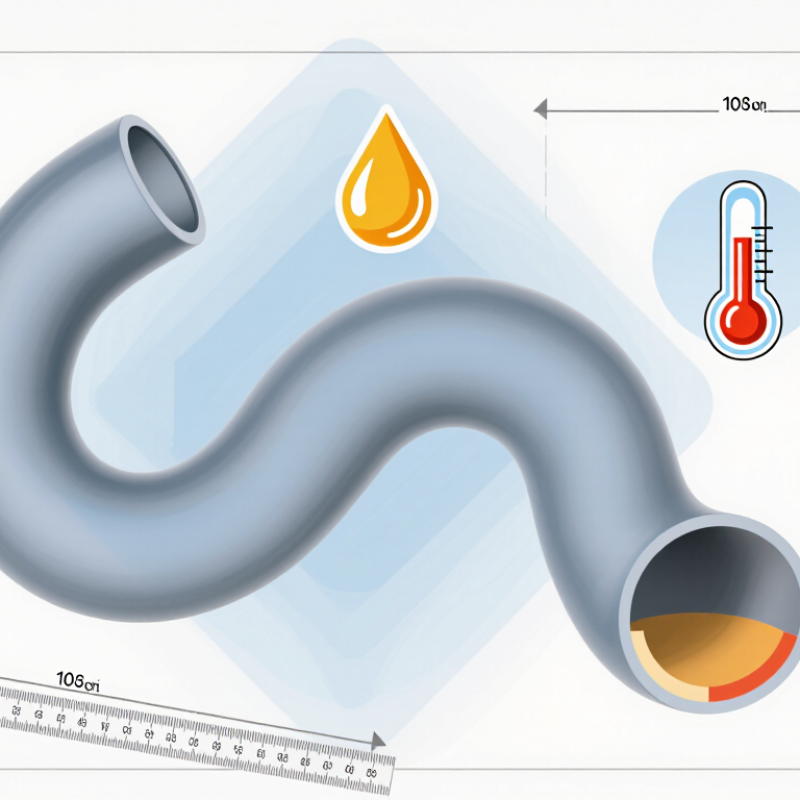
A special-shaped silicone tube should begin with a clear description of its shape and job. Is the cross-section oval, D-shaped, keyed, or formed with several channels? A simple sketch with measured widths and heights gives suppliers more useful information than “fits the space.” Small details matter. Note where the tube must seal, bend, drain, or separate fluids. An offset channel, for example, may keep two streams apart but leave less material around one side. That detail deserves a closer look.
Then describe the operating conditions. Record the fluid or gas, expected temperature range, pressure, and cleaning routine. Include how the tube moves: does it flex repeatedly, stay compressed, or pass through a tight bend? These conditions can change which silicone formulation and wall thickness are suitable. Not always. A stated temperature limit alone may not reflect brief heat spikes or long exposure. If the tube contacts a fitting, measure the connection and check for a secure seal under realistic conditions. A short prototype test can reveal pinching or poor flow that a drawing misses. I would not assume the first shape is the best one; review the measurements after testing.
Temperature ratings need context. The FDA Food Code 2022 sets 57°C (135°F) as the minimum hot-holding temperature for many foods. That is a food-process threshold, not a silicone tube’s continuous-use rating. Ask for the grade’s continuous and intermittent temperature limits, then compare them with actual cleaning cycles. Hot washdown, tight bends, and repeated heating can shorten service life. Thermal cycling matters.
Media compatibility deserves the same scrutiny. Silicone often handles water and many mild chemicals well, but oils, solvents, and concentrated cleaners may cause swelling or loss of strength. Check compatibility data for the exact fluid, concentration, temperature, and contact time. Charts are only a starting point. For medical applications, ISO 10993-1:2018 distinguishes limited contact (up to 24 hours), prolonged contact (over 24 hours to 30 days), and long-term contact (over 30 days). These categories help define evaluation needs; they do not certify a tube by themselves. Request documentation for the finished tube, including applicable compliance statements and test conditions. A grade name alone is not enough.
| Tip | What to assess | Practical selection guidance | What to verify |
|---|---|---|---|
| 1. Define the temperature range | Continuous operating temperature, short-term peaks, and cold-start conditions. | Many general-purpose silicone compounds are used across ranges around −50°C to +200°C, but limits vary by formulation, exposure time, and mechanical load. Do not treat this range as a guarantee for every tube. | Ask for the compound’s continuous and intermittent temperature limits, and test the shaped section under the actual temperature cycle. |
| 2. Identify every contacting medium | Liquids, gases, cleaning agents, lubricants, and process residues that touch the tube. | Standard silicone offers useful flexibility and heat resistance but may swell or lose properties in some fuels, oils, solvents, and aggressive chemicals. Fluorosilicone can improve resistance to certain fuels and oils, but compatibility is fluid-specific. | Provide the exact medium, concentration, temperature, exposure duration, and cleaning method. Request immersion or application-specific compatibility data. |
| 3. Match the grade to the compliance requirement | Whether the tube is intended for food contact, pharmaceutical use, drinking water, or another regulated application. | Compliance depends on the finished article, intended use, formulation, manufacturing controls, and applicable jurisdiction. For example, FDA 21 CFR 177.2600 addresses certain rubber articles intended for repeated use; it is not a blanket approval of all silicone products. | Specify the market and use conditions. Review the applicable declaration, supporting test results, and any restrictions on temperature, contact type, or repeated use. |
| 4. Choose the appropriate cure system | Extractables, odor, cleanliness, production method, and post-curing needs. | Platinum-cured and peroxide-cured silicone are different processing options, not universal quality labels. Some applications specify platinum-cured material or controlled post-curing, while the required choice depends on the application and evidence needed. | Confirm cure system, post-cure conditions, extractables or cleanliness requirements, and whether the supplier can document the finished tube’s properties. |
| 5. Check the shaped profile under load | Wall thickness, bends, ribs, flat sections, compression, and required flow area. | A custom profile can deform or kink differently from round tubing. A thicker wall may improve resistance to collapse but can reduce flexibility and increase the force needed to bend or compress the tube. | Review a dimensioned drawing and tolerances. Test the actual profile for bend radius, collapse, flow, and recovery at operating temperature. |
| 6. Specify mechanical properties | Hardness, tensile strength, elongation, tear resistance, compression set, and flexing cycles. | Select properties based on the tube’s job: repeated flexing, sealing, pressure, or dimensional stability. A Shore A hardness value alone does not predict performance in every shaped design. | Request test methods and results for the properties that matter, and evaluate samples in the assembled application where possible. |
| 7. Validate the complete system | Fittings, clamps, pressure or vacuum, cleaning cycles, aging, and service life. | Tube performance depends on the complete assembly. A suitable compound can still fail if the profile is over-bent, the connection is poorly matched, or pressure and temperature exceed the design conditions. | Run application tests using the intended fittings, media, pressure, temperature, and cleaning schedule. Record acceptance criteria before production. |
Selection note: Temperature ranges and compatibility guidance are general screening information, not a substitute for compound-specific data or testing under the intended service conditions.
Set the tube’s dimensions from the installed route, not from a sketch alone. Measure the inner diameter, outer diameter, wall thickness, and each straight section. For a curved profile, record bend radius and overall length after the part rests in its intended position. A tube can look correct on a workbench yet pull tight once routed around a housing. Check the narrowest clearance, too. Small gaps matter.
Define tolerances for the features that affect fit and flow. An inner-diameter variation may change flow rate, while an oversized outer diameter can prevent a connector from seating fully. Avoid specifying extremely tight tolerances everywhere; they can add cost without improving performance. That trade-off is easy to overlook. Note the measurement points and whether dimensions apply before or after bending. If the shape is unusual, a sample fitting or a simple physical template can clarify the drawing, though it may not capture every production variation.
Describe connection requirements in practical terms: connector type, insertion depth, sealing method, and any retention feature. State whether the tube must slide over a barb or meet a rigid port. Include the mating part’s measured dimensions, not only its nominal size. A loose connection may leak; an overly tight one can stress the tube during assembly. Recheck the fit under expected operating conditions, since temperature and repeated flexing may change how the connection behaves.
Set dimensions, tolerances, and connection requirements before finalizing the design.
Example tolerance magnitudes in millimeters for key tube features. These are practical starting points, not universal limits; confirm achievable tolerances with the manufacturer and validate fit, sealing, and flow in the intended assembly.
Manufacturing method shapes performance. Extrusion suits uniform profiles, while molding can form elbows, branches, and changing cross-sections. Ask how the supplier controls cure temperature, die alignment, and wall thickness. A small shift at a bend can create a thin inner wall. Check samples from the actual tooling, not only a straight test length. Measure critical dimensions after curing and conditioning; silicone can change slightly as it cools.
Test the properties your application needs. ASTM D412 covers tensile properties, and ASTM D624 covers tear resistance; neither alone proves long-term service life. Add compression-set testing, fluid exposure, and pressure or leak checks when relevant. Test the finished shape, especially tight corners and joints. A smooth surface is reassuring, but it cannot reveal a weak seam.
Grand View Research estimated the global silicone market at about US$18.4 billion in 2023 and forecast 6.0% annual growth through 2030. That market figure signals demand, not product quality.
Request batch-level results, acceptance limits, and traceability records. Then review a failed sample, if available; it may reveal more than a polished certificate. Manufacturers do not always share this detail, so the gap deserves attention.
Compare samples under real working conditions, not just on a desk. Check the profile dimensions with calipers, then bend the tube around the tightest curve in your assembly. Does it flatten, twist, or spring back unevenly? A short trial can reveal more than a polished specification sheet. Ask for samples made with the intended material and process; otherwise, your comparison may be misleading. Test fit, flexibility, and resistance to the temperatures or fluids your application requires. Keep notes and photos. Small differences matter.
Compare total cost, not only the price per metre. Include tooling, minimum order quantities, inspection, packaging, shipping, and the cost of rejected parts. A low quote can become expensive if the shaped section varies and slows assembly. Request a written breakdown, and clarify which dimensions are inspected on each production run. I would also check supply availability: typical lead times, production capacity, and how material changes are communicated. Ask whether repeat orders can match the approved sample. Then leave room for reality; forecasts change, and one supplier’s confident estimate is not a guarantee. A second source may help, but qualifying it takes time. Do not skip that work.