
What Are the Top 10 Stone Hammer Crusher Types?

Choosing the right Stone Hammer Crusher can shape an entire crushing operation. It affects output, maintenance, energy use, and product consistency.

In quarries, construction sites, and aggregate plants, different hammer crusher types serve different material conditions. Some machines handle soft limestone efficiently, while others process harder stone with reinforced rotors and wear-resistant liners. A compact crusher may suit a small recycling yard, but it can struggle under continuous heavy feeding. In contrast, a heavy-duty model offers stronger impact force, although its installation and maintenance demands are higher.

This guide examines the top 10 stone hammer crusher types through practical performance factors. These include crushing capacity, feed size, rotor design, hammer arrangement, discharge control, and replacement-part availability. Field experience shows that operating conditions often matter more than catalogue figures. Dust levels, moisture, uneven feeding, and abrasive particles can quickly change machine performance.

No ranking is perfect.

The best choice depends on the stone, production target, and working environment. A crusher that performs well in a dry limestone plant may deliver disappointing results with wet, sticky material. Buyers should also inspect the manufacturer’s technical support, testing records, and safety documentation before making a decision.

Some details remain easy to overlook. For example, a poorly balanced rotor can create vibration, noise, and premature bearing damage. Operators should monitor these signs instead of waiting for a breakdown. The following overview compares ten common types, while recognizing that real-world performance may vary between sites.
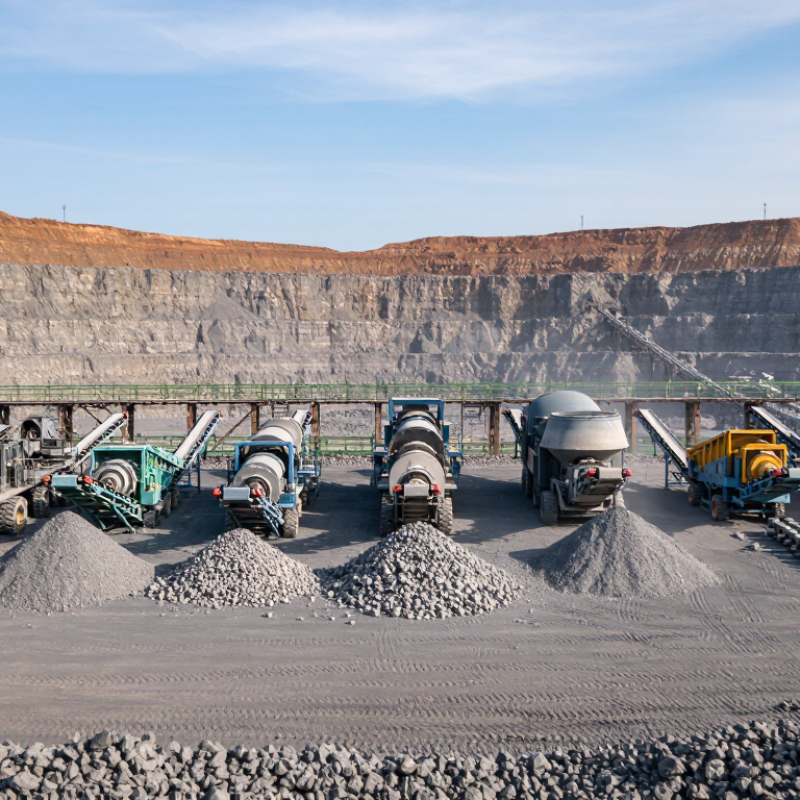
What Are the Top 10 Stone Hammer Crusher Types?

What Is a Stone Hammer Crusher and How Does It Work?

What Are the Top 10 Stone Hammer Crusher Types?

A stone hammer crusher reduces rock through repeated blows from hardened hammers. The rotor spins inside a crushing chamber. Feed enters from above, then strikes the rotating hammers and breaker plates. Smaller particles leave through a grate or adjustable outlet. It is direct, fast, and sometimes surprisingly dusty.

Common configurations include reversible, non-reversible, single-rotor, double-rotor, ring-hammer, heavy-duty, fine-crushing, vertical-shaft, mobile, and laboratory hammer crushers. These categories can overlap. A “top ten” list is therefore useful, but not perfectly standardized across equipment engineers. Selection depends on rock hardness, moisture, feed size, desired product shape, and maintenance access.

The U.S. Geological Survey’s Mineral Commodity Summaries 2024 estimated U.S. crushed-stone production at about 1.5 billion metric tons in 2023. That volume explains why small efficiency gains matter. A worn hammer changes impact energy and product grading. Excessive moisture can also block grates and reduce throughput. Operators should inspect rotor balance, liner wear, bearing temperature, and discharge sizing during real production, not only during commissioning. The European Commission’s Best Available Techniques guidance also emphasizes energy, dust, noise, and maintenance controls for mineral processing. Hammer crushers can be efficient, but the wrong feed conditions quickly expose their limits.

How Are Stone Hammer Crushers Classified by Rotor and Hammer Design?

What Are the Top 10 Stone Hammer Crusher Types?

How Are Stone Hammer Crushers Classified by Rotor and Hammer Design?

Stone hammer crushers are commonly classified by rotor structure and hammer arrangement. A practical list includes single-rotor fixed-hammer crushers, reversible single-rotor crushers, double-rotor crushers, multi-row rotor crushers, and ring-hammer crushers. Each design changes impact frequency, discharge control, and wear distribution. A single rotor suits many medium-hard stones. A double rotor can improve crushing consistency when feed size varies.

Hammer design creates five more common types: swinging-hammer, fixed-hammer, toothed-hammer, smooth-faced-hammer, and segmented-hammer crushers. Swinging hammers absorb some uncrushable impact and may reduce sudden stress. Fixed hammers deliver stronger contact force but require careful feed control. Toothed hammers grip softer limestone effectively. Smooth faces often perform better on brittle materials. Segmented hammers simplify partial replacement.

Rotor speed also influences the result. A fast rotor can produce finer output, but excessive speed may increase dust and liner wear. During equipment checks, inspect hammer edges, rotor balance, and discharge gaps. Uneven wear often reveals poor feeding or incorrect material moisture. Moist clay can block the grate.

The classification is useful, but not perfectly standardized. Some manufacturers combine several designs in one machine. That distinction matters. Selection should match rock hardness, target size, feed grading, and maintenance access. In actual operation, a theoretically efficient hammer may underperform when operators ignore moisture or uneven feeding. Waste occurs quietly.

What Are the Top 10 Types of Stone Hammer Crushers?

Stone hammer crushers are grouped by rotor design, crushing stage, and working conditions. The top 10 types commonly used in stone processing are single-stage hammer crushers, double-stage hammer crushers, reversible hammer crushers, heavy hammer crushers, ring hammer crushers, box hammer crushers, vertical-shaft hammer crushers, fine hammer crushers, mobile hammer crushers, and wet-material hammer crushers. The categories overlap. A perfect ranking does not exist.

Single-stage models suit ordinary limestone and controlled feed sizes. Double-stage units handle softer materials through two crushing chambers. Reversible designs reduce uneven hammer wear by changing rotor direction.

Heavy hammer crushers accept larger stones and create strong impact force. Ring hammer crushers use freely suspended rings, which can reduce blockage. Box hammer crushers combine impact and shaping inside a compact chamber.

Vertical-shaft types work well when a more cubical product is required. Fine hammer crushers target smaller output, but their screens may wear quickly. Mobile versions support quarry relocation and short production runs.

Wet-material models can process damp stone, although sticky feed still causes trouble. From field inspections, moisture and feed size often matter more than advertised capacity.

Check rotor balance, liner condition, discharge opening, and dust control before choosing equipment. Small errors in sizing become expensive maintenance later.

Test samples under real conditions when possible.

How Do Capacity, Feed Size, and Output Shape Differ Among Types?

What Are the Top 10 Stone Hammer Crusher Types?

Stone hammer crushers are selected by feed size, capacity, and required product shape. The USGS Mineral Commodity Summaries 2024 reported about 1.5 billion metric tons of U.S. crushed stone production in 2023. This scale explains why equipment selection cannot rely on capacity alone. Common types include single-stage, double-rotor, reversible, ring-hammer, heavy-hammer, box-hammer, vertical-shaft, fine-hammer, impact-hammer, and compound crushers.

Single-stage and fine-hammer models usually accept feed below 300 millimeters and deliver about 5–150 tonnes per hour. Their product is relatively fine, but excessive moisture can block the grate.

Heavy-hammer, box-hammer, and double-rotor designs may handle 600–1,200 millimeter feed and reach roughly 300–1,200 tonnes per hour. They produce a broad grading range, with more coarse fragments when the discharge opening is enlarged.

Reversible and ring-hammer units often suit medium feed sizes and flexible operation.

Vertical-shaft and impact-hammer crushers generally create more cubical particles. They fit shaping duties, especially when concrete or asphalt requires controlled geometry. Compound crushers balance coarse reduction and secondary shaping, but their actual capacity varies widely. Technical guidance from the European Commission’s JRC BAT reference materials emphasizes that feed moisture, rock abrasiveness, and screening arrangement strongly affect performance.

These ranges are practical estimates, not guarantees. Laboratory tests may use dry, uniform stone. Quarry material is rarely so cooperative.

A neglected liner can change output shape before operators notice. That detail deserves more attention.

How Should You Choose the Right Stone Hammer Crusher?

What Are the Top 10 Stone Hammer Crusher Types?

Choosing the right stone hammer crusher requires more than comparing catalog prices. Common types include single-stage, double-rotor, reversible, ring-hammer, heavy-duty, fine-crushing, hydraulic, composite-hammer, wet-material, and mobile units. Each design handles different feed sizes, moisture levels, and output targets. A machine suitable for limestone may perform poorly on abrasive granite.

The USGS Mineral Commodity Summaries 2024 estimated United States crushed-stone production at about 1.5 billion metric tons in 2023. This scale shows why capacity, wear cost, and energy use matter. Check the stone’s compressive strength and abrasiveness before selecting a crusher. Also measure the largest feed lump, required product size, and daily operating hours. A high-speed fine crusher can create excellent shaping, but excessive fines may reduce screening efficiency. A cheaper crusher can become an expensive mistake.

Tips: Request a test report using your actual stone. Compare tons per hour at the required product size, not the maximum brochure figure. Inspect hammer material, liner thickness, rotor balance, and access for maintenance. Moist or clay-rich feed may need pre-screening. Safety guards and emergency stops deserve equal attention. I would also keep a 10–15% capacity margin, although site conditions can make this estimate imperfect. Energy intensity should be reviewed alongside the equipment’s expected service life, using operating records rather than assumptions.

What Are the Top 10 Stone Hammer Crusher Types? - How Should You Choose the Right Stone Hammer Crusher?
No. Crusher Type Typical Design or Classification Typical Feed Size Typical Product Size Indicative Capacity Suitable Materials Main Advantages Key Limitations Best Selection Scenario
1 Single-Stage Heavy Hammer Crusher Large rotor with heavy-duty hammers; primary crushing in one stage. Up to approximately 300–600 mm, depending on machine size and material. Approximately 0–25 or 0–50 mm. About 50–1,000 t/h; highly model-dependent. LimestoneGypsumCoalClay Can combine coarse crushing and partial shaping; simplified flowsheet; high reduction ratio for soft to medium-hard feed. High wear when the feed contains abrasive quartz, hard inclusions, or excessive moisture. Choose it when a single crushing stage is preferred and the feed is relatively soft, non-sticky, and low in abrasive minerals.
2 Reversible Hammer Crusher Rotor can operate in either direction; both hammer faces can be used before replacement. Approximately 100–300 mm. Approximately 0–10 or 0–25 mm. About 20–300 t/h. LimestoneCoalMarlShale Improved hammer utilization; more uniform wear; convenient for applications requiring regular product sizing. It is not suitable for highly abrasive feed or large uncrushable metal pieces; directional operation does not eliminate wear. Choose it when balanced wear and easy maintenance are more important than maximum reduction of very hard rock.
3 Ring Hammer Crusher Uses ring-shaped hammers mounted around a rotor; commonly applied in coal and soft mineral preparation. Approximately 100–300 mm. Approximately 0–25 or 0–30 mm. About 30–600 t/h. CoalLigniteCokeSoft Shale Good impact action; effective for friable materials; can produce a relatively consistent granular product. Ring wear and rotor components require inspection; very wet or sticky feed can reduce throughput. Choose it for high-volume crushing of friable materials where controlled granulation is required.
4 Fine Hammer Crusher Smaller discharge openings and a higher-speed impact arrangement for fine crushing. Usually approximately 50–200 mm. Approximately 0–3 or 0–5 mm. About 5–200 t/h. LimestoneGypsumCoalGlass Can produce a fine product in a compact process; may reduce the need for a separate secondary crusher. Fine screens and grates can plug with wet feed; wear may increase with abrasive materials. Choose it when the required product is fine and the feed moisture is controlled.
5 Box Hammer Crusher Enclosed crushing chamber with heavy hammers and impact plates; often designed for coarse-to-medium reduction. Approximately 200–300 mm. Approximately 0–25 or 0–50 mm. About 30–400 t/h. LimestoneCoalBrickConcrete Debris Strong impact crushing; relatively simple layout; can handle a broad range of soft to medium-hard feed. Heavy impact loads require a strong foundation and regular inspection of liners, hammers, and grate sections. Choose it when a robust crusher is needed for general-purpose primary or secondary crushing.
6 Hammer Mill Crusher High-speed rotor with multiple hammers and a grate or screen controlling the discharge size. Usually approximately 20–150 mm. Approximately 0–3 or 0–10 mm. About 1–100 t/h. CoalBiomassGypsumSoft Minerals Compact equipment; adjustable product sizing through screens or grates; effective for small and medium production lines. Not generally preferred for hard, highly abrasive stone; screens may require frequent cleaning with damp feed. Choose it for fine crushing, laboratory or small industrial applications, and relatively soft materials.
7 Limestone Hammer Crusher Application-oriented configuration optimized for relatively soft, brittle, and usually low-to-moderately abrasive limestone. Approximately 200–600 mm, depending on the crushing stage. Approximately 0–10 or 0–25 mm. About 50–1,000 t/h. LimestoneMarlDolomite High reduction ratio; suitable for cement, aggregate, and lime-related preparation when the stone is not highly abrasive. High-silica limestone can cause rapid hammer and liner wear; wet clay contamination can reduce efficiency. Choose it after testing the limestone's compressive strength, silica content, moisture, and clay proportion.
8 Clinker Hammer Crusher Heavy-duty impact crusher configured for hot, hard, and irregular clinker discharge. Approximately 50–300 mm. Approximately 0–25 or 0–50 mm. About 20–300 t/h. Cement ClinkerHot Granular Solids Handles irregular clinker lumps and can provide useful size reduction before grinding. Hot feed, high impact loads, and abrasive clinker can accelerate component fatigue and wear. Choose it only when the crusher is rated for the actual feed temperature, clinker hardness, and required cooling conditions.
9 Shale and Clay Hammer Crusher Impact crusher selected for layered, friable, or moderately soft materials; sometimes fitted with specialized feed and discharge arrangements. Approximately 100–400 mm. Approximately 0–25 or 0–50 mm. About 20–300 t/h. ShaleClayMarlMudstone Effective for breaking laminated and friable feed; can support raw-material homogenization in some process lines. Sticky, plastic, or high-moisture clay can plug the chamber, grates, and transfer equipment. Choose it when the material is friable and moisture is low enough to maintain free flow through the crusher.
10 Mobile Hammer Crusher Hammer crusher mounted on a track or wheeled platform; a mobility configuration rather than a separate crushing mechanism. Approximately 100–500 mm, depending on the integrated crusher. Approximately 0–25 or 0–50 mm. About 30–500 t/h. LimestoneConstruction DebrisCoalSoft Rock Can move between work areas; reduces fixed civil infrastructure; suitable for short-term or changing sites. Transport, fuel, dust control, and maintenance space must be considered; mobility does not make the hammer crusher suitable for abrasive rock. Choose it when the crushing location changes frequently or when a permanent foundation is impractical.
Selection guidance: Confirm the feed's maximum lump size, compressive strength, abrasiveness, moisture, clay content, required product size, capacity, and allowable fines before choosing a stone hammer crusher. The capacity and size ranges above are indicative industry ranges rather than guaranteed specifications; actual performance depends on rotor dimensions, hammer configuration, grate spacing, feed gradation, and operating conditions.