What Is a Vending Machine and How Does It Work?

A vending machine is a compact retail system that sells products without a traditional cashier. You may see one in a school hallway, railway station, hospital, or office lobby. Behind its glass front, shelves, motors, sensors, and a control board work together. The machine accepts a payment, records the selection, and releases the chosen item through a delivery slot.

Modern machines may support coins, banknotes, contactless cards, and mobile payments. A display guides customers through each step. Product sensors help confirm whether an item has dropped successfully. Temperature controls protect drinks, sandwiches, or other perishable goods. However, these systems are not perfect. A payment can be delayed, a spiral can stop moving, or a product can become stuck. Good design reduces these problems, but regular maintenance remains essential.

Understanding how a vending machine works involves more than watching a snack fall. It requires examining the payment reader, product storage, dispensing mechanism, software, and safety features. Operators must check stock levels, expiration dates, electrical connections, and cleaning conditions. Customers also need clear prices, accurate change, and reliable refund procedures. These details build trust in unattended retail.

This guide explains the machine’s main parts and operating cycle in practical terms. It also considers common faults, energy use, accessibility, and responsible maintenance. A vending machine looks simple. Its operation is not.
What Is a Vending Machine and How Does It Work?

Definition and Basic Purpose of a Vending Machine

What Is a Vending Machine and How Does It Work?

Definition and Basic Purpose of a Vending Machine

A vending machine is a self-service device that sells products without a cashier present. Its basic purpose is simple: provide quick access to everyday goods in convenient locations. Customers select an item, complete payment, and collect the product from a delivery compartment. Common products include bottled drinks, packaged snacks, personal care items, and small travel necessities.

The process depends on several coordinated parts. A control system receives the customer’s selection and checks payment details. Sensors confirm that the chosen product is available. A motor, spiral mechanism, or lift then moves the item toward the collection area. Another sensor may verify that the product has dropped safely. The machine can also display prices, stock information, and instructions on a small screen.

In my experience, the best machines are easy to understand within seconds. Clear labels matter. So does reliable temperature control for items that require cooling. Regular cleaning, restocking, and technical inspections support safe and consistent operation. Still, the simple appearance can be misleading. A stuck product, weak payment connection, or inaccurate inventory reading can quickly reduce customer trust. Some machines also provide limited help for users with visual, mobility, or language needs. Better design should consider these real situations, not only fast sales. A vending machine is convenient, but its usefulness depends on careful maintenance and thoughtful access.

Main Components and Internal Structure

What Is a Vending Machine and How Does It Work?

Main Components and Internal Structure

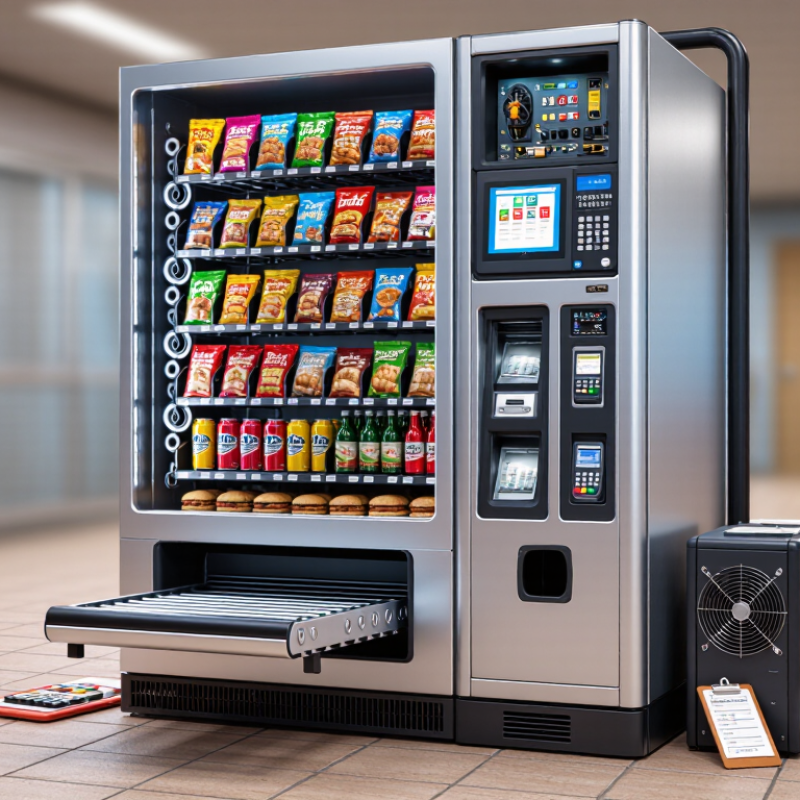
A vending machine is a compact retail system that stores, identifies, and releases products automatically. Its cabinet protects the internal parts from dust, impact, and temperature changes. Inside, a metal frame supports product shelves, wiring, motors, and control boards. Each shelf contains a delivery lane. Spiral coils move packaged items forward, while some machines use small conveyors or lifting trays. The correct mechanism depends on product size and weight.

The control board acts as the machine’s decision center. It receives selections from the keypad or touch panel. It also checks payment signals, motor activity, and door sensors. A product sensor confirms whether an item has reached the collection area. If the path is blocked, the controller can stop the motor and display an error.

That sounds simple. It is not always simple. A tilted package may trigger a false delivery signal.

Other important parts include a power supply, cooling unit, heater, lighting system, and secure collection bin. Temperature sensors help maintain suitable conditions for items that require cooling. Payment hardware verifies approved transactions before the motor starts. In a practical inspection, technicians check loose cables, worn coils, blocked vents, and inaccurate sensors. Cleaning matters too. Dust around fans can reduce cooling performance. A machine may appear functional while delivering products inconsistently. Regular testing of every lane reveals problems that visual checks often miss.

How a Vending Machine Processes a Purchase

What Is a Vending Machine and How Does It Work?

A vending machine is a compact retail system that completes a purchase without a cashier. The customer chooses an item through buttons or a touchscreen. The machine then checks the selection, price, and available stock. Payment may come from coins, notes, or an electronic method. A confirmation screen shows the amount before approval. This small step reduces mistakes, although customers can still select the wrong item.

How a Vending Machine Processes a Purchase

After payment is authorized, the control system sends instructions to a delivery mechanism. A motor turns a spiral coil, opens a compartment, or moves a product along a belt. Sensors watch for the item to reach the collection area. If the product drops correctly, the transaction is recorded as complete. The process takes only a few seconds. Not always smoothly.

A jam can leave the payment approved but the product undelivered. In that situation, the machine may display an error and provide refund instructions. Reliable systems also monitor temperature, stock levels, door access, and repeated motor failures. Regular maintenance is essential because dust, tilted packages, or weak sensors can interrupt a simple purchase.

A practical test should include different product sizes and payment methods. One successful sale proves little. The design still needs careful review, especially when a customer receives no clear explanation after a failed delivery.

Payment Methods, Product Selection, and Dispensing

A vending machine is a compact retail system that stores products, accepts payment, and releases a selected item. The 2024 Global Payments Report found that digital wallets represented about 30% of in-person payment value worldwide in 2023. This shift is visible in vending, where customers increasingly expect contactless cards, mobile wallets, and coins to work together. The screen is simple. A payment reader verifies the transaction, while sensors confirm whether the chosen item is available.

Product selection depends on location, time, and buying habits. A workplace may need coffee, water, and light snacks. A transport station may favor quick meals and cold drinks. Operators can study sales records, temperature patterns, and stock-outs before changing the product mix. Grand View Research estimated the global vending machine market at more than 20 billion U.S. dollars in 2023. That growth suggests stronger demand, but demand alone does not guarantee good selection.

After payment, a motor, spiral coil, or elevator mechanism moves the item toward the delivery bay. Sensors may detect a successful drop and trigger a refund if the product becomes stuck. In practice, dispensing is not flawless. A bent package can block the coil. A weak sensor can report success too early. Regular cleaning, test purchases, and inventory checks therefore matter. The 2024 Global Vending Machine Market analysis also identifies automation and cashless operation as important development trends. Still, reliable vending depends on small details: accurate pricing, visible instructions, stable connectivity, and products placed within easy reach.

What Is a Vending Machine and How Does It Work? - Payment Methods, Product Selection, and Dispensing
Data Dimension Common Options or Components How It Works Typical Characteristics
Basic Definition Self-service automated retail machine The machine stores products, accepts payment, receives a selection, and releases the purchased item without requiring a cashier. Designed for unattended sales and continuous access during the machine’s operating hours.
Main Control System Electronic controller, display, keypad or touchscreen, and software The controller coordinates payment approval, product selection, inventory signals, motor operation, and transaction status. It can prevent a sale when payment is incomplete, a product is unavailable, or a dispensing fault is detected.
Coin Payment Coin acceptor and coin-change mechanism Sensors identify the denomination and validity of inserted coins. The machine calculates the balance and returns change when supported. Useful for cash transactions, but it requires regular coin collection and replenishment of change tubes.
Banknote Payment Electronic banknote validator The validator checks the size, optical features, and security characteristics of a banknote before crediting its value. Acceptance depends on the currencies and denominations configured for the machine.
Card and Contactless Payment Magnetic-stripe, chip, or contactless card reader The payment terminal sends the transaction for authorization. The machine completes the sale only after receiving an approval or an accepted offline response. Requires compatible payment hardware, transaction processing, and suitable network connectivity in many installations.
Mobile and Digital Wallets Near-field communication reader or machine-linked payment interface A customer presents a compatible mobile device or digital wallet, and the payment system authenticates the transaction before product release. Provides a cashless option and may reduce the need for physical payment handling.
Product Selection Push buttons, keypad, touchscreen, or item code The customer enters a product code or touches an item on the screen. The controller checks price, stock status, and the payment balance. Selection interfaces may also show nutrition information, product images, prices, and error messages.
Product Storage Spiral shelves, compartments, trays, hooks, or refrigerated columns Products are placed in dedicated lanes or compartments sized for their packaging. Each position is associated with a selection code and price. Storage design depends on product size, shape, weight, temperature requirements, and risk of damage.
Spiral-Coil Dispensing Motor-driven spiral coil A motor rotates the coil, moving the selected item forward until it falls into the collection area. Commonly used for packaged snacks, small boxes, and other products with regular shapes.
Conveyor or Belt Dispensing Motorized belt or moving shelf A belt moves the product toward the front of the machine and transfers it to the retrieval compartment. Can handle some product shapes that are unsuitable for standard spiral coils.
Elevator or Soft-Drop Dispensing Internal lift, delivery tray, or controlled-drop mechanism The product is moved to the delivery area on a platform or through a controlled path rather than being allowed to fall freely. Helps reduce impact and is suitable for fragile containers or products that could be damaged by a direct drop.
Delivery Verification Drop sensor, motor feedback, optical sensor, or product-position sensor The machine checks whether the selected item reached the retrieval area. If delivery fails, the controller may retry, cancel the vend, or initiate a refund procedure. Verification methods vary according to machine design and product type.
Temperature Control Insulated cabinet, compressor, evaporator, thermostat, and ventilation system For chilled products, a cooling system removes heat from the storage compartment while a thermostat monitors the internal temperature. Refrigerated machines require electrical power and periodic cleaning and maintenance.
Inventory Monitoring Sales records, shelf sensors, motor counts, or remote telemetry The machine records selections and may estimate remaining stock from dispensing events or sensor readings. Monitoring accuracy depends on the sensor design, product placement, and whether restocking data is entered manually.
Refund Handling Automatic coin return, payment reversal, or operator-managed refund If a payment is accepted but the item cannot be delivered, the machine or payment system can return or reverse the transaction when supported. The available refund method depends on the payment type, machine configuration, and transaction status.
Power Supply Standard electrical connection with internal power conversion Electricity powers the controller, display, payment devices, motors, sensors, lighting, and refrigeration equipment when present. Refrigerated and illuminated machines generally use more electricity than non-refrigerated machines.
Typical Transaction Sequence Choose product → pay → authorize → dispense → verify The machine identifies the selection, confirms sufficient payment, activates the dispensing mechanism, and checks the delivery result. The complete process usually takes only a few seconds, although payment authorization and mechanical faults can increase the time.
Common Product Categories Packaged snacks, bottled drinks, canned drinks, hot beverages, personal-care items, and small convenience goods Products are selected according to local demand, packaging durability, shelf life, cabinet configuration, and temperature needs. Machines are generally optimized for compact products with predictable dimensions and clearly defined prices.
Routine Maintenance Restocking, cleaning, cash collection, inspection, and technical servicing An operator replenishes products and change, removes expired items, cleans contact surfaces, and checks payment and dispensing components. Maintenance frequency depends on sales volume, product type, location, climate, and machine complexity.

Types, Uses, and Modern Features of Vending Machines

A vending machine is a compact retail system that stores products, accepts payment, and releases a selected item. Inside, motors, spirals, sensors, and a control board coordinate each sale. A customer chooses a code, pays, and waits for the delivery sensor to confirm movement. Sometimes it fails. A stuck snack still frustrates a customer.

Vending machines now serve drinks, packaged meals, personal-care items, electronics accessories, and workplace supplies. Traditional coil machines suit snacks, while refrigerated units protect milk, salads, and fresh meals. Smart machines add touchscreens, digital payments, remote inventory tracking, temperature alerts, and sales analytics. These features help operators refill the right products instead of guessing. They also improve customer confidence when a payment succeeds but the product does not drop.

The market shows why this format keeps changing. Grand View Research estimated the global vending machine market at about $21.84 billion in 2023, with continued growth expected through 2030. Allied Market Research projects the industry could reach roughly $37.2 billion by 2030. These figures differ because research firms use different market definitions. That matters. A machine in a subway station needs speed and vandal-resistant construction, while one in a hospital needs quiet operation and clear nutrition information. Experience from daily operation still matters more than dashboards alone. Sensors can report stock levels, yet they cannot always explain damaged packaging, awkward placement, or a customer’s hesitation.

What Is a Vending Machine and How Does It Work?

Vending machines are automated retail systems that accept payment, verify a selection, and release a product without direct staff assistance. Their development has progressed from simple coin-operated dispensers to refrigerated, cashless, and connected machines.

The timeline shows widely documented historical milestones: early coin-operated dispensing in the 1st century CE, commercial postcard vending in the late 19th century, automated cigarette vending in the 1920s, refrigerated food vending in the 1960s, and the adoption of cashless payment and remote monitoring in the 2000s.